**ROAR** on Breastfeeding Guilt (via Stork Stories… Birth & Breastfeeding)

Jun 3
Submitted for the Healthy Birth Blog Carnival #6: MotherBaby Edition
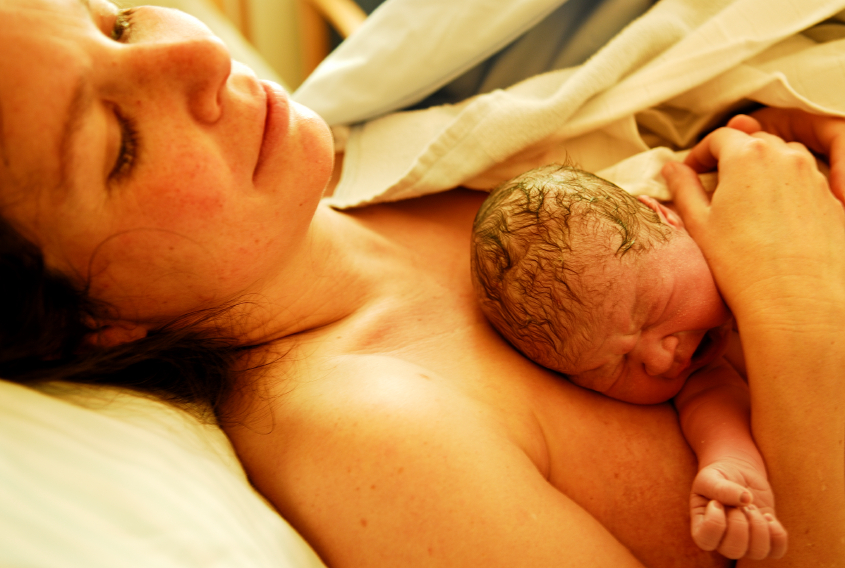
Skin to Skin immediately after birth is an extremely important part of the continuum of the nurturing of pregnancy, the process of birth and the transition of nurturing from inside mom to outside mom. This is the natural habitat where baby should transition and begin his own regulations of breathing, heart rate, temperature etc… This is recognized by the AAP in their changes to the Neonatal Resuscitation Algorithm back in 2000. The recommendation was to keep baby with mom and provide all initial evaluations and steps with baby on moms chest for all healthy babies! We all know that babies have an inborn innate ability to self attach and nurse right after birth. These recommendations are not just for vaginal births. Kathy Petersen has a beautiful description of the importance of STS after a Cesarean birth on her Woman to Woman Childbirth Education blog in her 5/30/10 post Skin-to-Skin in the O.R. after a C-section.
As soon as I heard about the last edition of Science and Sensibility’s Healthy Birth Blog Carnival with a theme about “keeping moms and babies together after birth”, I wanted to write about my tiny little efforts, struggles and some successes in providing moms and babies with an environment that supports and protects their need to stay together. My recent role in the protection of such an environment and subsequent privilege of watching a baby self attach in the OR 15 min after a C/S birth has re-energized my efforts to get more mother’s and nurses to speak up and make this a standard for healthy babies!
Then….. I saw a link on Laura Keegan’s Facebook fan page for her book Breastfeeding with Comfort and Joy to an awesome video and a beautiful photo posted by the author of Cesarean Parents Blog about her birth. I had heard of Laura’s search for images of STS after C/S and asking for mother’s experiences. Amy Romano from Science and Sensibility alerted Laura of the photo: Kathy blogged about STS after C/S and I was working on this post! Such uncanny timing! I am just in awe of this marvelous networking community! Head over to Laura’s facebook link and share your experience for her info gathering. Here is the fabulous video they are all talking about “Breast is Best” from Norway:
Why is it so hard for the doctors and nurses to get on board? Most of them understand the word “bonding”. But what many don’t realize is that it took a long time for the actual concept to take hold, to allow “time” for bonding to occur. It sounds silly but many times if the baby and mother are still together after 2 hours…the nurses call that “extended bonding”. I have been doing this for over 35 years now and the changes from the 70’s to now are fascinating and frustrating at the same time. To understand the process of change, we have to sometimes remember where we’ve been. I wrote about Medical Science vs Natural Childbirth a year ago because I feel history IS important to help us move forward. Often it is about control… but many times nurses and doctors are simply task oriented/focused and not patient centered. They want to complete all their procedures and charting and move on to the next task. I understand this, there is always a lot to do and document. I work there too! The environment provided to us, the health-care workers, is one in which regulations are abundant and staffing is not always optimal. Flexibility is needed. I know there is a way. This culture just has to change. And it happens in small little doses.
SO–> Skin to Skin immediately after a C/S? I have been told by coworkers, doctors and anesthesia:
“It’s impossible, “
“It can’t be done”
“There’s not enough room”
“This patient (the mom) is in the middle of major surgery!”
“The baby needs to be under the warmer, it’s too cold in the OR.”
Really? Seriously? Watch Me………
I have actually been working on this issue for the past few years…… Ever since I began staff education for World Breastfeeding Week 2007′s theme “Breastfeeding: The first hour — Welcome Baby Softly”. The focus from ILCA was: ‘Establishing a welcoming environment that keeps mothers and babies together.’ It was then that I gently tried to introduce the concepts for C-Sections as well as all vaginal births. I was getting a lot of positive response for vaginal births…not so for C/S.
Anesthesia is our biggest barrier. The chest area of the mother seems to belong to them somehow. The arms too.. I always politely ask the doctor for permission to have at least one arm released so she can touch her baby. (they are secured on armboards to her sides.) Really the OB’s didn’t mind what was happening outside of their draped domain. The Pediatrician is the next barrier because they want to finish a complete exam…. in the nursery…. before they returned to the office or whatever. So I started with the Peds… hoping they would stop expecting the baby to be quickly removed from the OR. I started with just simple requests for prolonged “bonding”… because they all get that. “Look how well this baby is transitioning.. so alert and PINK! ” “I’ll write all the measurements in your exam note…. I’m fine… I know you’re busy….” I’d say. Sometimes mom and baby got to stay together. Soon, for some of the doc’s, the expectation of baby leaving mom was gone. They got tired of waiting around and would leave. More moms and babies got to stay together…even if it was dad doing the holding. My co-workers were not always so understanding because of the work flow on the unit. It would work best when the birth happened any time other than first thing in the morning when it’s busy everywhere. Isn’t that sad? Sitting here writing this I’m thinking of ways to work on that….. another time…..
Anesthesiologists or Nurse Anesthetists are all different. There are some wonderful ones who are releasing both arms and pushing things out of the way for the baby and others who are constantly telling moms they are “under” anesthesia and can’t hold the baby, or they have given meds to mom right after baby is born so mom is now groggy. I talk to each of them respectfully and differently depending on their own approach. I have discussed my plans for STS if baby stable ahead of time. I have discussed how it is up to us to provide this protected environment for moms etc… I have used the patient satisfaction discussion, the scientific evidence discussion, the patient centered care discussion, and the increased patient numbers due to higher satisfaction talk. I have let them know that when a mother requests that–> we must do everything possible to help her experience this.
Slowly, over the last few months, I was able to facilitate some babies really getting skin to skin in the OR for short periods before going to the nursery. There were a variety of factors for why it wasn’t very long each time but at least it was happening!! It’s not a standard of care yet and I’m the only one working on it but others are getting interested… Communication has been very important to create the environment and reduce barriers. We still have a long road ahead. But we did pave a path for this mom….
She came in with an unknown double footling breech presentation in active labor and the doctors wanted to do a C/S right away. She was really upset and had a beautiful birth plan that was already getting discarded. “STS until first breastfeed accomplished” was on her plan and I was determined to help her with that! Things were happening fast. The anesthesiologist wasn’t my best STS supporter.. “oh well” I thought, “I’ll do what I can to help.” The baby was crying and pink when born and without thinking about it, the doctor, nurses and myself had him on the baby unit drying him. Mom went panicky! “Give him to me, give him to me! He has to be ON me! You just took him OUT of me, now he HAS TO BE ON ME!” She was literally trying to sit up. Anesthesia was drawing up meds for her (that was his answer). I said “OK here he comes!”. So I didn’t ask anyone’s permission this time….. just held that naked baby in one hand, snapped open her gown with the other and helped him move in. I asked for a warm blanket and looked up to see the other nurse and doctor staring at me. I said “Seriously… she’s exactly right, he does belong ON her!” Anesthesia saw the immediate transformation of his frantic patient to one with calm maternal bliss, admiration and cooing. He was then helpful to let her other hand out. This little boy stayed with mom, breastfed before he was 15 min old and went to the PACU with mom. She was so incredibly happy. I never got to see her after that since it was near the end of my shift and I wasn’t on shift the next few days. I saw that she exclusively breastfed in the hospital and without complication went home on day 3. At least part of her birth experience went according to plan!
If she hadn’t have been so vocal about what she wanted, so adamant… she would not have experienced what she did.
SPEAK UP AMERICA…. MAKE IT HAPPEN
Want to see more? This stunning video of a baby skin to skin then breastfeeding at birth in the operating room via @MothersUtopia @Laura_Keegan. What were your experiences? Please don’t forget to head on over to Breastfeeding with Comfort and Joy on FB to comment on your experience or opinion about this important topic!! Calling for women to share their experiences with skin to skin here, to help give a voice to the real need to make skin to skin in the OR routine practice in all ORs.
May 9
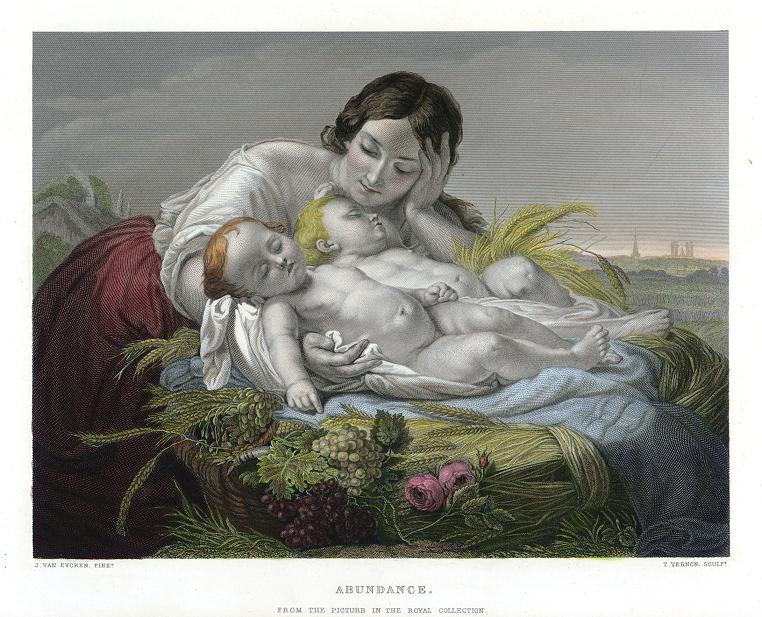
1859 "Abundance" engraved by T.Vernon
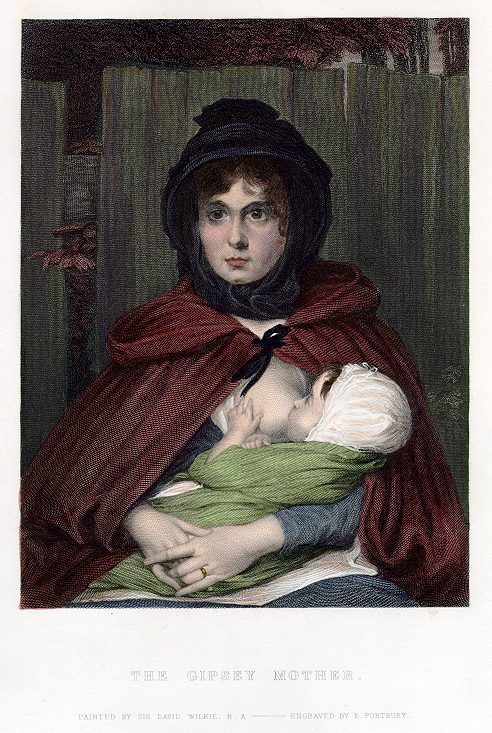
1850 "The Gypsy Mother" engraved by E.Portbury
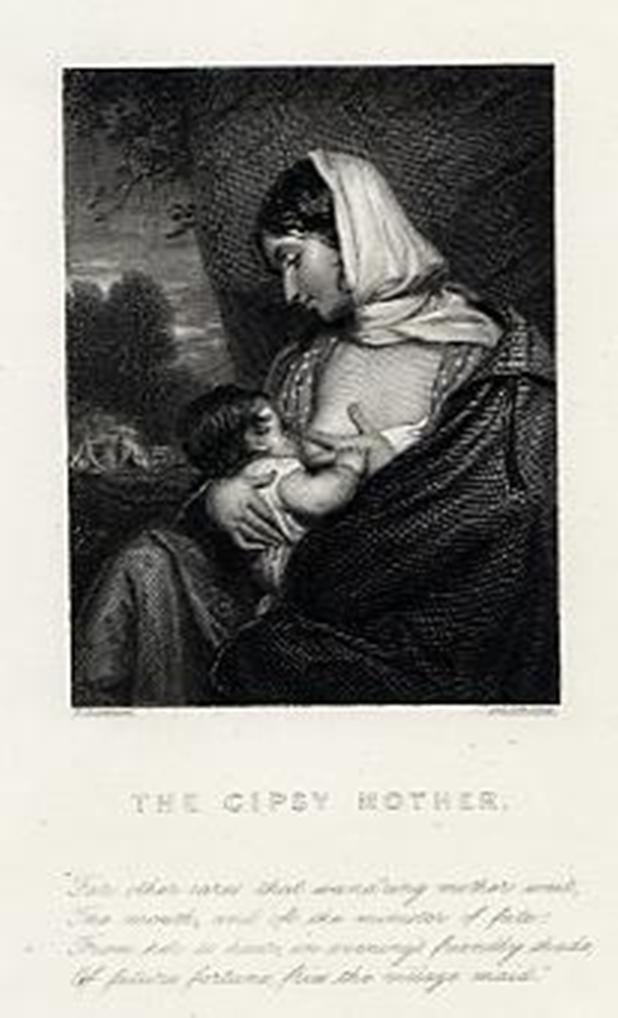
1840 "The Gypsy Mother" engraved by Greatbach
In the world of childbirth, Mother’s Day is a very special day. I have enjoyed years of watching a women become a mother either for the first time or again and again on this very day. It is always wonderful to share that experience with them. Fabulously Joyful!
But today, I get to be home, pampered by my hubby and just milling about… I came across some wonderful websites carrying fabulous vintage engravings and various clip art. I absolutely adore antique engravings! I have some framed and others saved for something I’ll get to one day… 😉
This first few photos above are images courtesy of antiqueprints.com depicting mother and children. There are two WONDERFUL Antique Breastfeeding Engravings! These are all steel engravings with hand color in the first two.
The remainder of art below is from a website called “The Graphics Fairy” and all of these photos are to Karen’s credit over there. Beautiful!
Enjoy!
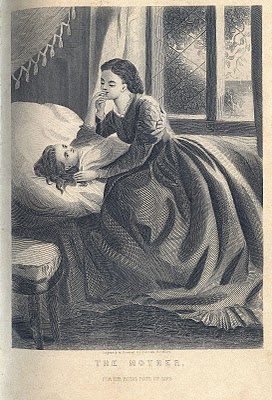
Victorian "The Mother" engraved by the Illman Brothers

1880's Antique Engraving Children with Cherries

Beautiful old painting of a Mother with Children
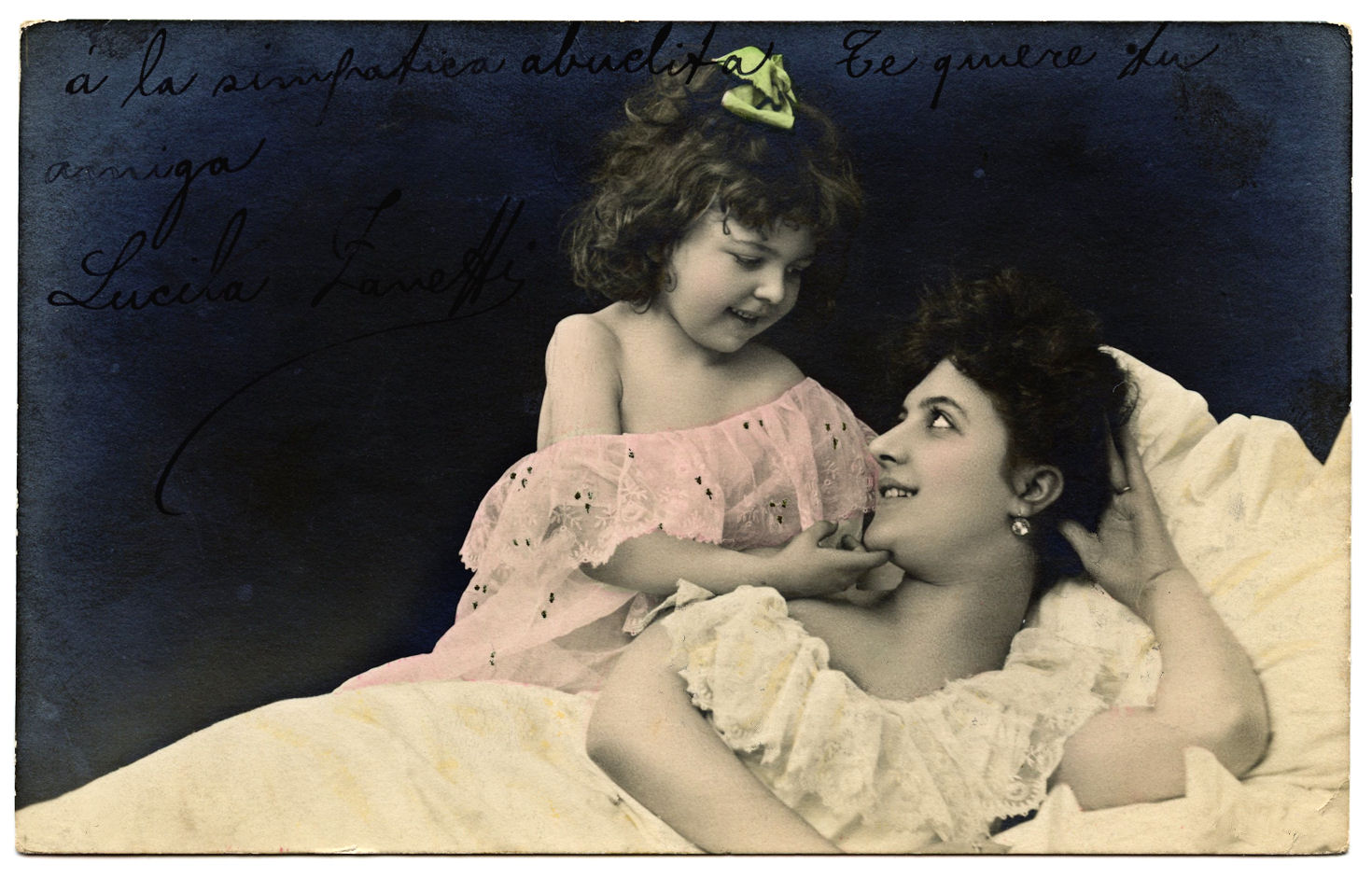
Old French post card
Spreading the word from the NIH VBAC conference….It’s now coming thru via AWHONN Vitals!!!
This is at least a month old news to most birth junkies but….. but I find it encouraging that the news is coming thru from AWHONN (Association of Women’s Health, Obstetric and Neonatal Nurses). There are many many nurses and birth professionals out there that haven’t even heard about this conference. I know the big AWHONN convention is coming up in Nashville June 12th, and possibly this topic will be presented somewhere although late to get on agenda. Sometimes the nurses can help educate the docs…… ya think?
One topic on the Nashville Agenda is:
“SOLUTIONS FOR SURVIVAL: Working where Birth is NOT Considered NORMAL”
Boy~ would I love to go to that presentation!!!!!
From the recent AWHONN newsletter~
“Panel Urges New Look at Caesarean Guidelines”
The New York Times, Denise Grady
A government panel recently took steps that will increase women’s ability to find doctors and hospitals that will let them attempt a normal birth after a previous caesarean section. The recommendations came from a panel at a National Institutes of Health (NIH) conference convened to assess why the rate of vaginal birth after Caesarean section (VBAC) has gone from 28.3% in 1996 to less than 10% today. The repeat surgeries are contributing to the growing rates of C-sections in the U.S., which today account for nearly a third of all deliveries. Repeat C-sections were previously deemed safer due to concerns that the uterine scar would rupture, putting both the mother and the baby at significant risk. According to the chairman of the NIH conference, “We found the use of VBAC is certainly a safe alternative for the majority of women who’ve had one prior” C-section, as long as the incision was horizontal and low on the uterus. Approximately 70% of women who have had C-sections are good candidates for attempting a normal birth, and 60% to 80% of those who try succeed. The government panel urged the American College of Obstetricians and Gynecologists and the American Society of Anesthesiologists to “reassess” their guidelines, which have rendered many clinicians and hospitals unwilling to allow VBACs. The groups’ current guidelines require that surgical and anesthesia teams be “immediately available” during labor if a women has had a prior C-section. Some institutions were unable to comply, and thus banned VBACs altogether.
Link to Article
 I haven’t ever sat through a whole episode of The Office…. maybe that’s why I didn’t ever really like it. Perhaps I just didn’t “get” it! This is a smart and funny show. Last night, they had a large viewing audience and great forum to send a positive message to America. They delivered… in a big way! This was a planned hospital birth so I am mentioning what I thought was positive about the reality of how this was portrayed.
Here’s what I liked:
The funky cover –> hey..it worked for her so really–who cares..?? I didn’t feel like that was a big part of the overall message IMHO.
My rating : Big A+
After the show– I find out via twitter that I actually know the writer and supervising producer! So cool!
(I work with his father who is an excellent Pro-Breastfeeding Pediatrician!)
😎 Psych 😎
What did you think?? The episode is called “The Delivery”. If you haven’t seen it, you can catch it online here.
Jan 7
Hi everyone! Happy New Year!
I have been very very busy over these past months and I’ve spent very little time on the computer….. many of you have had the same situation. Thanks to all of you who keep checking my blog anyway!
I’m here now to talk about one of my big concerns.
Your due date…
Every single year around the holidays, we have a surge of elective, social induction requests. Here are some comments we occasionally may hear each year around this time on an L&D unit:
“Please, please induce me so I can have the baby and be home for Christmas…please!”
“I’m only 2 1/2 weeks from my due date anyway so I’m ready…”
“I can’t have this baby on Christmas day..I just can’t…you HAVE to help me!!”
“I’m so tired of being pregnant and I have so much to do…can’t you do SOMETHING and make me have this baby today??” (37weeks)
“I really really need another tax deduction this year… ” (heard quite often!)
“Please do something so this baby is born by the end of December…I’ll even have a C/S if you want.”
“Can you induce me while my family is all here?? Please??”
Young pregnant women~ Please don’t do something crazy for a special delivery date.
Please!
Please educate yourself about the risks of induction and the risks of late preterm births.
PATIENCE
“A little patience now adds up to long-term health benefits for your new baby.”
I have received this following information from the Mother-Friendly childbirth community.
I felt it was well worth sharing……..
This is an excerpt from a newsletter from the CIMS ~ Coalition for Improving Maternity Services.
Please read, check out their website link above and the other resources listed below the letter.
Thanks so much!
“For Expectant Families
What you need to know about your due date and late preterm birth
A little patience now adds up to long-term health benefits for your new baby.
You’re not alone if you’re secretly (or openly!) hoping that your baby will get here sooner rather than later. But when it comes to your due date, it’s important to understand what it represents, what it does not represent, and the potentially serious consequences of agreeing to an induction or c-section before your baby is ready to be born.
Mayri Sagady Leslie, CNM, MSN, clinical faculty at Yale University School of Nursing, recently penned an insightful post for Lamaze International’s Science and Sensibility blog. In “Beyond Due Dates: How Late is Too Late,” we’re reminded that, despite widespread belief that EDD stands for ‘due date’, it actually stands for ‘estimated date of delivery’! Mayri writes, “No matter what you call that date on the calendar, it is nothing more than a formula derived from statistical averages which says that sometime within a range of 4-5 weeks your baby will probably be born. Smack dab in the middle of that range is one of days on which the labor may start. Yet when it comes to dates in our life, few take on more significance than this one.”
Appreciating this fact is something of considerable consequence when it comes to the immediate and long-term health of your baby. There is mounting evidence that only the baby should have the right to choose her/his birthday. Two recent reports add to this evidence.
The CDC’s National Center for Health Statistics recently reported a 20% increase in the nation’s late preterm (34 to 36 weeks ) birth rate from 1990 to 2006. The report also cites alarming increases in the number of late preterm births among births for which labor was induced as well as among births that were delivered by c-section. The report cautions, “…it is becoming increasingly recognized that infants born late preterm are less healthy than infants born later in pregnancy. Late preterm babies are more likely than term babies to suffer complications at birth such as respiratory distress; to require intensive and prolonged hospitalization; to incur higher medical costs; to die within the first year of life; and to suffer brain injury that can result in long-term neurodevelopment problems.”
For the March of Dimes, prematurity is an extremely important public health issue. The March of Dimes launched a multimillion dollar, multiyear campaign in 2003 to prevent premature birth and raise awareness of its serious consequences. Last month, the March of Dimes released its annual Premature Birth Report Card. Sadly, for the second consecutive year, the U.S. earned only a ‘D’ grade, “demonstrating that more than half a million of our nation’s newborns didn’t get the healthy start they deserved.”
We know you’re anxious to meet your baby. It’s perfectly understandable too if you’re just plain tired of being pregnant. We just want to remind you that a little patience now adds up to long-term health benefits for your new baby.
Learn more:
“Beyond Due Dates: How Late is Too Late” by Mayri Sagady Leslie on Lamaze International’s Science & Sensibility blog.
“Born a Bit Too Early: Recent Trends in Late Preterm Births” a NCHS Data Brief from the CDC. “U.S. Gets A “D” For Preterm Birth Rate” press release from the March of Dimes.”
Nov 17
|
Oct 28
 I had checked out a post by Jill from Unnecesarean reviewing ICAN’s Press release on the rising Cesarean Rate and how mom’s really don’t realize or recognize how they can reduce their risk for a surgical delivery. It is very good informative post. It’s just totally shameful and pathetic that one third of our nation’s babies are brought in to this world with a surgical delivery! I’ve been present for thousands of births. I remember when the doctors were under pressure to keep their C/S rates down under 20%!! They had to go under peer review when they hit individual rates over 16%. Those days are over.
I have seen many different changes in the field of obstetrics, I am embarrassed that our national rates are now this high! I don’t feel that this is an advancement in maternal fetal obstetrical care. It feels like such a cop out most of the time when you are there in the trenches experiencing the “call” for a C/S time after time for “failure to progress”; “failure to descend”; “arrest of dilitation” etc…etc..
I came across the perinatal statistics and thought I’d share.
Here are our Actual Cesarean Section Rates so far this year January thru September
for nearly 750 births:
Our average is about a quarter of the births falling below the national average of a third… for now. Can we keep this up?? I hope so. I really hope so. I hope we can even lower it! With a NICU coming in and sicker patients to go along with that… I am hopeful to just keep it where it is. I will do my best to help educate women, co-workers and the doctors I work with.
Oct 20
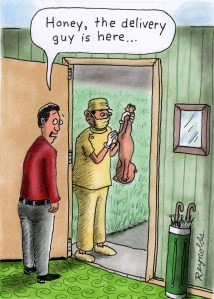
permission from CartoonStock
Our Maternity Services
Need Help!
The Maternal Child care delivery system in this country as a whole needs vast improvement. All of these 10 steps as well as the 10 steps to ensure optimal successful breastfeeding are very important.
These items are sadly grossly misconstrued or ignored by many facilities offering maternity services in this country. I have been having the same discussions and occasional arguments with co-workers lately on this battle of the newborn baby staying in the moms room overnight!!! I know~ it is a no brainer to those of you who read, research and understand. Many of my co-workers still defend their philosophy that the baby needs to come into the nursery at night so the mom can sleep!! Many argue with me about labor positions and inductions!! AARRGGHH! I won’t get into our details right now…….
What I have here for you today is NOT new info but I recently reviewed it again as I was searching for evidence to back my discussions with staff. If you haven’t placed this information in your workplace to nudge some resistant peers, I urge you to do so!
This document : THE COALITION FOR IMPROVING MATERNITY SERVICES:
EVIDENCE BASIS FOR THE TEN STEPS OF MOTHER-FRIENDLY CARE can show you research studies or data which support the ten steps below.
The 10 steps for Mother-Friendly Care from CIMS {Coalition for Improving Maternity Services} taken from their website…..are:
Ten Steps of the Mother-Friendly Childbirth Initiative
For Mother-Friendly Hospitals, Birth Centers,* and Home Birth ServicesTo receive CIMS designation as “mother-friendly,” a hospital, birth center, or home birth service must carry out the above philosophical principles by fulfilling the Ten Steps of Mother-Friendly Care.
A mother-friendly hospital, birth center, or home birth service:
- Offers all birthing mothers:
- Unrestricted access to the birth companions of her choice, including fathers, partners, children, family members, and friends;
- Unrestricted access to continuous emotional and physical support from a skilled woman—for example, a doula,* or labor-support professional;
- Access to professional midwifery care.
- Provides accurate descriptive and statistical information to the public about its practices and procedures for birth care, including measures of interventions and outcomes.
- Provides culturally competent care—that is, care that is sensitive and responsive to the specific beliefs, values, and customs of the mother’s ethnicity and religion.
- Provides the birthing woman with the freedom to walk, move about, and assume the positions of her choice during labor and birth (unless restriction is specifically required to correct a complication), and discourages the use of the lithotomy (flat on back with legs elevated) position.
- Has clearly defined policies and procedures for:
- collaborating and consulting throughout the perinatal period with other maternity services, including communicating with the original caregiver when transfer from one birth site to another is necessary;
- linking the mother and baby to appropriate community resources, including prenatal and post-discharge follow-up and breastfeeding support.
- Does not routinely employ practices and procedures that are unsupported by scientific evidence, including but not limited to the following:
- shaving;
- enemas;
- IVs (intravenous drip);
- withholding nourishment or water;
- early rupture of membranes*;
- electronic fetal monitoring;
- Has an induction* rate of 10% or less;†
- Has an episiotomy* rate of 20% or less, with a goal of 5% or less;
- Has a total cesarean rate of 10% or less in community hospitals, and 15% or less in tertiary care (high-risk) hospitals;
- Has a VBAC (vaginal birth after cesarean) rate of 60% or more with a goal of 75% or more.
other interventions are limited as follows:
- Educates staff in non-drug methods of pain relief, and does not promote the use of analgesic or anesthetic drugs not specifically required to correct a complication.
- Encourages all mothers and families, including those with sick or premature newborns or infants with congenital problems, to touch, hold, breastfeed, and care for their babies to the extent compatible with their conditions.
- Discourages non-religious circumcision of the newborn.
- Strives to achieve the WHO-UNICEF “Ten Steps of the Baby-Friendly Hospital Initiative” to promote successful breastfeeding:
- Have a written breastfeeding policy that is routinely communicated to all health care staff;
- Train all health care staff in skills necessary to implement this policy;
- Inform all pregnant women about the benefits and management of breastfeeding;
- Help mothers initiate breastfeeding within a half-hour of birth;
- Show mothers how to breastfeed and how to maintain lactation even if they should be separated from their infants;
- Give newborn infants no food or drink other than breast milk unless medically indicated;
- Practice rooming in: allow mothers and infants to remain together 24 hours a day;
- Encourage breastfeeding on demand;
- Give no artificial teat or pacifiers (also called dummies or soothers) to breastfeeding infants;
- Foster the establishment of breastfeeding support groups and refer mothers to them on discharge from hospitals or clinics
† This criterion is presently under review.
I endorse these steps. You can visit their website to also endorse.
Kathy from Woman to Woman Childbirth Education wrote about the CIMS press release on the Need for Transparency regarding the rising C/S rates. Excellent information is discussed here by the CIMS and I enjoyed the discussion between Kathy and RealityRounds.
I also would urge you all to visit and give information to The Birth Survey.
How is your birth place measuring up to these initiatives?
Let’s all continue to make this a better world
in which to give birth!!


I hope you enjoy reading...Please let me know what you are thinking with a little comment, note or just to say hello~ Thanks for stopping by!