Skip to content

Posts from the ‘Birth Stories’ Category

1977 “Lilly”

~Trigger Warning~ This is a story about a little girl born with congenital anomalies associated with a chromosomal disorder”

In 1977, ultrasound was not a routine part of prenatal care. We couldn’t see a baby’s face, count fingers and toes, or routinely identify congenital anomalies before birth. Sometimes we weren’t even certain of the due date. As labor and delivery nurses, we never really knew what surprises awaited us.

And one morning, a little girl named Lilly would leave an impression on me that lasted a lifetime.

Both delivery rooms were occupied when Naomi first felt the urge to push. We weren’t even certain she was full term. Our small maternity unit had two labor rooms and two delivery suites, and having three women ready to deliver simultaneously was almost unheard of!

Our obstetrician, Dr. M., was moving between the delivery rooms, still without his sterile gown. I checked Naomi. She wasn’t quite fully dilated, so we encouraged her to blow through her contractions and resist pushing. Her belly was unusually small.

I told Dr. M. she had only an anterior lip remaining. He picked up the wall phone and called his backup across the street.

Suddenly Betty, the nurse in Delivery Room 1, yelled for help. Her multiparous patient was crowning! I rushed in with Dr. M., who barely had time to catch the screaming baby boy, much less put on sterile gloves.

Meanwhile, nurses were switching rooms, those with more experience moving where needed most. A floor nurse came to help, and our manager was wheeling an older Kreiselman Infant warmer bed into Naomi’s labor room and gathered emergency supplies to set up a makeshift delivery area at her bedside. Within a few minutes, the call bell was yanked out of the wall, triggering the emergency alarm.

Everyone ran into Naomi’s room. She had just precipitously delivered a tiny baby girl in the bed.

The baby wasn’t breathing.

Betty was drying and stimulating her, desperately trying to get her to cry.

Silence.

Only Naomi’s frightened voice broke through.

“What’s wrong? Why isn’t she crying?”

Dr. M. clamped and cut the cord. I got her under the heater and grabbed the newborn Ambu bag from the dusty plastic bag hanging near the wall oxygen. The mask was too big for her tiny face!

“Somebody find the preemie mask!”

I struggled to maintain a seal until someone handed me a smaller mask. With positive-pressure ventilation, her color improved. After about a minute, she began moving and making weak little cries.

She was breathing on her own!

We reassured Naomi and brought her daughter close enough to touch while she stabilized. Dr. M. asked more questions about her pregnancy dates. Just the previous day, Naomi had been told she was eight and a half months along.

She named her daughter Lilly.

Lilly weighed just 4 pounds, 3 ounces.

In our special care nursery, we had only one cardiac monitor but several isolettes, one of which was always kept warm. I placed Lilly in a warmed isolette, attached the monitor, and performed her routine newborn care: identification bands, footprints, silver nitrate eye drops, and a vitamin K injection. We kept her on extra oxygen, which we piped directly into the isolette, periodically checking the concentration with an oxygen analyzer. She remained pink with supplemental oxygen but had decreased muscle tone. Although small, she didn’t appear particularly premature.

During my assessment, I noticed several unusual findings.

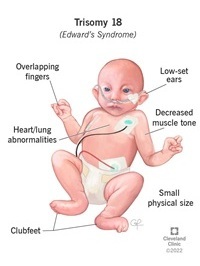
Her ears were low-set, her feet had the curved appearance described in textbooks as rocker-bottom feet, and her hands were clenched in an unusual position, with fingers overlapping. I could identify only two vessels in her umbilical cord rather than the usual three.

She had some characteristics of a full-term newborn, yet her muscle tone and extended extremities seemed more like those of a premature infant.

Something wasn’t right. None of us had ever cared for a baby quite like Lilly.

Naomi was desperate to see her baby.

In 1977, mothers rarely entered the nursery. Babies were generally cared for separately from their mothers, and even routine feeding followed the nursery’s schedule.

But our manager made an exception.

Naomi arrived in a wheelchair, frightened and anxious for news. I had her scrub her hands and put on a gown before bringing her alongside Lilly’s isolette.

I guided her hand through the small opening so she could touch her daughter’s leg.

“She is so little. Why is she so tiny?” she asked.

Then she noticed Lilly’s hands.

“She’s making a cute little fist.”

I reassured her that Lilly was stable for the moment and that the pediatrician would be arriving soon.

I couldn’t give her answers we didn’t yet have.

Searching for a Diagnosis

Our pediatrician, Dr. H., examined Lilly but wasn’t certain what was causing her unusual features.

When Naomi mentioned taking vitamin supplements during pregnancy, he asked to see them. After reviewing the labels and consulting a colleague at a larger medical center, he considered vitamin A toxicity as one possible explanation.

He also suspected a chromosomal disorder.

Lilly needed specialized evaluation, including chromosome studies, at a neonatal intensive care unit 75 miles away.

When Naomi returned to the nursery, she was crying.

She beside the isolette, gently holding Lilly’s tiny hand through the opening.

Then she began to sing.

Softly, she sang and talked to her daughter while I prepared the paperwork and supplies for transport.

Before the NICU team arrived, I wrapped Lilly in a blanket and placed her in Naomi’s arms, keeping oxygen nearby.

When the transport team arrived, they transferred Lilly to their monitoring equipment and established an umbilical arterial line. One team member carefully explained each procedure to Naomi and promised to call once Lilly was settled.

Finally, Naomi kissed her little girl goodbye.

And they were gone.

Just like a whirlwind.

Naomi was discharged the next day so she could be at her daughter’s side.

The Diagnosis

Several weeks later, we learned that chromosome studies had confirmed Trisomy 18, also known as Edwards syndrome. Lilly also had an associated congenital heart defect.

Edwards syndrome was first described in 1960. It is a rare condition caused by an extra copy of chromosome 18, affecting fetal growth and development.

, prenatal screening and diagnostic testing can often identify Trisomy 18 before birth. But in 1977, those capabilities were not routinely available to our patients.

According to the Cleveland Clinic, Trisomy 18 is a serious, life-limiting condition. Many affected pregnancies end in miscarriage or stillbirth. Babies born alive often have congenital heart defects, breathing difficulties, feeding problems, and other complications.

Survival varies, and although some children live considerably longer, the prognosis is often poor.

[Insert Cleveland Clinic diagram and source here.]

Looking Back

I have often thought about Lilly and her mother.

We didn’t have a prenatal ultrasound showing us what to expect. We had no advance warning, no team assembled for a known diagnosis, and no immediate answer for a mother asking why her baby wasn’t crying.

We had our training, our experience, the equipment available to us, and each other.

But what I remember most isn’t Lilly’s unusual physical features or even the frantic moments of resuscitation.

It’s Naomi sitting beside that isolette, holding her daughter’s tiny hand and singing to her.

In a time when mothers and newborns were routinely separated, that quiet moment of connection was something very special.

We didn’t yet know what Lilly’s future would hold. But Naomi knew she was her daughter. And she loved her.

Author’s Note: This story is drawn from my nursing experiences. Some patient details, conversations, and events have been combined or reconstructed to protect privacy. The medical practices, equipment, and nursing environment reflect the realities of the time. See my About page for more information.

Facing a Trisomy 18 diagnosis is scary and extremely overwhelming. Many Trisomy 18 pregnancies result in miscarriage or fetal death. There are resources available to help guide parents today. Following is a link to the Trisomy 18 Foundation. https://trisomy18.org/

Photo credit: Cleveland Clinic website accessed 10/16/2026
Hospital Maternity Wards in the 1970’s

We’ve come a long way baby!  It’s now 50 years I’ve been involved in the business of birth and babies.

I AM BACK WITH MORE STORIES!

j0283941Some of the stories I want to tell are about maternity life as an OB nurse in the 70 ‘s. This is what I remember and not any type of historical reference. Try to picture this as I attempt to set the stage for some of the other stories I wish to tell. There will be some birth stories, some breastfeeding stories and some ‘special baby’ stories. Congenital anomalies, syndromes and unusual situations which have beautiful love stories. I also need to mention that ads are random, and I am not recommending any item for which you may see an ad.
When I first started to learn the business of birthing babies, I was taught by nurses who had already been doing this for 25 or 30 years…. They all wore scrub DRESSES not “scrubs” and some wore their nurses caps. These ladies were seasoned, experienced, somewhat hardened nurses and they referred to me as… “the young whipper-snapper”. This could be because I was practically a teenager, barely 20 yrs old !! I also immediately hemmed my scrub dresses up to a mini skirt length! Even though I was so very naive, I was very eager to learn and fell in love with the birth process…. I soaked up everything they taught me.

We probably had 700- 800 births a year at the time. Most vaginal deliveries stayed 4-5 days and Cesareans about 7 – 8 days. Seemed busy a lot of the time as far as the census.

Many of the mom’s in labor wanted twilight sleep and then opted to be “put under” which didn’t happened until they were moved to the delivery room, crowning. Seems so ridiculous now…I mean it’s just about over! Why get put out now?? Many were heavily medicated. We gave pain meds including Demerol, Vistaril, Morphine, Scopalamine and some barbituates.  Our Labor Rooms were doubles. No privacy, with one bathroom for 4 beds. When a mother was admitted to the labor room, she was given a full shave prep, and a soap suds enema. Remember, one bathroom for 4 beds. Fathers were NOT “allowed” in…. much later they were “allowed”..but only if they were married AND could produce a certificate of some kind that they had gone to a childbirth class!! Even then, just learning, I hated the regimented mentality and all the rules!

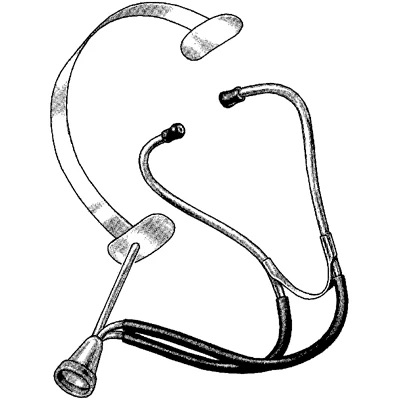
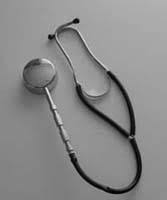
We did not initially have a fetal monitor. When we did get one, it was used only if the doctor thought there was a need or if we saw meconium. Mostly we used a DeLee-Hillis Fetoscope (looks like a unicorn on your head) or a Leffscope Fetoscope (a heavy round metal disc we called it a Leffscope). We would get fetal heat tones on admission and every 15 or 30 mins or so. I know there is a lot of controversy now about fetal monitoring. I get it…both sides of the debate. I respect that. In the 70’s, we didn’t have it, we didn’t know much about it so there were many unanticipated needs for newborn resuscitation. These poor girls would be in labor, often with out anyone to help them. Many of the nurses would be out having coffee and cigarettes while labor progressed until it was time to push. The nurses’ felt no obligation to be a “coach”. There was virtually NO paperwork compared to today. The mom’s would push in the labor room until it was time to go to the delivery room……THEN we would move this poor lady onto a stretcher, barely cover her with a sheet and head across the hall into the Delivery Room where she had to move once again onto the Delivery Table.

This image has an empty alt attribute; its file name is dh2.jpg
DeLee-Hillis
Credit Google Images
PhotoCredit Worthpoint
LeffscopePhoto Credit Worthpoint

Before there were beepers…. The doctor would either stay in the “on-call” room, office across the street or he’d be at home. There were a few doc’s who loved to play tennis or basketball, there were courts at the college on the same side of the building as labor/delivery. On the weekends, we would use a window shade to signal when the doctor needed to come in for the birth! They were good about dropping the ball so to speak and running in when needed!

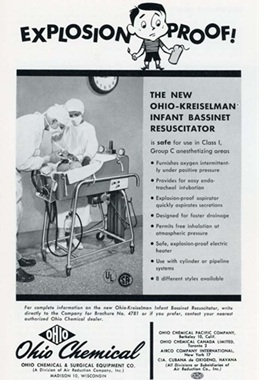
The Delivery Room was treated with the respect of an operating room. Everything had to be “sterile” and everyone had to be dressed like we were doing open-heart surgery. Blood was considered clean. we didn’t wear gloves to handle blood or birth fliuds! Sterile gloves were worn for sterile procedures and regular gloves were worn for handling contaminated items. We would crank crank crank the bed to move the bottom half away and the mom would get all draped up to her neck. For care of the baby, we used a Kreiselman Bassinet Resuscitator. Check out this old ad. 


This ad doesn’t show the heater over top of infant- this model illustrated had heated bed. Our old green Kreiselman baby bed had a warmer over the top and oxygen/ suction/ positive pressure assisted breathing attachments. If the baby was in any trouble, we would call anesthesia to help if they were not already there giving the mom her requested “put me out” gases. Most babies were just fine, only sluggish and sleepy. If mom did get put out..she probably didn’t see her baby until many many hours later. Can you imagine? Twins were often a surprise…. this was before ultrasound. An episiotomy always seemed to be the norm. It wasn’t always a medial but often a big mediolateral episiotomy. So barbaric compared to today.

Once delivered, the baby went to the nursery and became the immediate property of the nurses, only to be seen from a window and allowed to be with the mother at token intervals. The poor little baby was often keep without food/ only water for the first 12 hrs. Breastfeeding was something only the hippies did in the early 70’s… the re-interest or rise in breastfeeding began in the later 70’s. The mother would be once again moved to a stretcher and taken to the Recovery Room where she was awoken, told if she had a boy or girl AND finally be allowed a visit by her husband.

I am so very happy that things are better now. Some of the stories I wish to share in the future will reflect the times and our knowledge as it was then.

My 1st Witnessed Birth

BIRTH STORIES !!!

I can’t possibly start to tell these stories without a tidbit of the first birth I ever attended! This birth did indeed implant a desire for me partake in the miracle of birth over and over again!

The year is circa 1963. Living in our old 1811 saltbox farmhouse, all 5 of us ( my brother, sisters and I) are gathered in the large upstairs bathroom which was probably a bedroom at one time prior to indoor plumbing! Near the radiator on a bed of old towels, our beloved dog Dreena was giving birth to a litter of puppies! How excited I was at the age of 9! I was always an outspoken little girl… a “hoyden” my father so fondly called me. I had to try to be involved in the entire event. The first two puppies were born and Dreena was affectionately licking them. I was immediately sold on the whole thing.

A little while later, the third puppy was expelled with the amniotic sac intact…….Not waiting to see what happened next—I ran to my father to report!

“Daddy!”

“There are 3 puppies now and this last one came out in a plastic bag!!”

Project 2025 Ideology Affects Pregnant Women’s Access to PRENATAL CARE

nashvillebanner.com/2025/07/20/doctor-denies-pregnant-woman-care/

The NICU Bullies

This is going to be a new series about my experience with workplace bullying. Bullying that was aimed at me. Even with witnesses- nothing was EVER done to help me.

Any of you fellow NICU nurses may find things familiar. Has it happened to you? When I get into details about our shift and what went on…… that’s later…

I will just start with this…

It’s always these tormented sleepless nights when my barely healed scars are acutely dissected into fresh wounds as I relive those viscous hateful assassinations of my character. Repeatedly wondering what I did to be treated like that. So they can flip their pretty manes and go on with their lives as if nothing happened. But for me- my entire life changed. Just in case you ever wonder if people get over how you treat them. Some of us don’t or can’t.

Workplace bullying is life changing for the victim. LIFE CHANGING-  Especially myself, who had been a very strong clinician possessing excellent skills, forward progressive thinking, placing new evidence-based info into practice, compassionate, a real leader and teacher of staff and families being reduced to a bubble of tears and unable to function. 

I had a nervous breakdown

I was unable to ever return to work.

Shouldn’t those responsible be held accountable? 

A New Birth

I finally retired from the hospital!!

44 YEARS filled with life!

I know I haven’t posted here in a long time

So very much to say

I have some more birth stories, baby stories and work life stories to tell

I have some very difficult stories to tell

SO— I have been quiet for so long because I wasn’t ready to share my whole story.

“THE NICU BULLY”

One Victim’s story

New Stories Coming Soon……..

Yes You Can Breastfeed with COVID19

Credit: NiDerLander

Copyright: NiDerLander

I’ve been approached with many questions about pregnancy and or breastfeeding with this virus. #Covid19

In many cases YES you CAN Breastfeed!

There is still so much unknown about this new #coronavirus .

For that reason, the experts with the most up to date info follow CDC recommended guidances for both protecting yourself thru pregnancy and breastfeeding.

Please review these CDC guidelines and discuss with Your and your babies health care providers for Pregnancy and Breastfeeding !

PELVIC REST

WHAT IS PELVIC REST and why would we say to do that?
Prenatal care is designed to watch moms closely during pregnancy. Sometimes there is the need to see a perinatologist or Maternal Fetal Medicine (MFM) doctor. When a pregnant momma has obvious signs of trouble like bleeding long before her due date or has shown signs of effacing early on… or dilating early… when she has had symptoms of preterm labor or runs of preterm labor with or without cervical changes– they often will tell her to have Pelvic Rest. This isn’t bed rest—- this is PELVIC REST to avoid introducing bacteria, stimulating contractions or start labor early.

Right now as I write this–> we have a full NICU of 26 to 33 weekers. You don’t want your baby born that early– you really don’t…….. After a rash of moms who didn’t realize their activity may cause preterm labor even though they “felt OK at the time” and engaged in the activity after being placed on pelvic rest…. I felt like- WELL—>

Maybe somebody just really has to say it ALL !
This is supposed to be a little bit funny!


Sometimes there is a partner
who pushes for a little intimacy and well— maybe you feel bad for him or her and/or maybe you want t0…… We know it’s difficult. You may want the intimacy or the connection.  If this partner is not also on pelvic rest–> you could be creative to get the connection so long as you adhere to the list below.

I am so sorry to have to really spell it out but……

This Means:

  • NOTHING in the vagina……..    Not a penis, Not a finger or thumb, Not a toe, Not a tongue, Not a lip, Not a dildo, Not a sex toy, Not anything in the house you can make into a dildo or sex toy, Not anything in the house that can FIT into the vagina, Not anything you may purchase or get outside your home that can fit into the vagina EVEN if the package does say “Sterile” on the outside!
  • No Crotch/Genital Stimulation or Rubbing   with or without your partner…. (or with anyone who isn’t your partner). This includes but not limited to: No rubbing of your genitals with those of another, No rubbing with hand, No licking, No labia sucking or hickeys, No clitoral sucking, No blowing of air into the vagina
  • No Orgasm.     I’m sorry- that is not good news. I know- but an orgasm can cause powerful uterine contractions. This means no orgasm brought on intentionally by any type of activity including nipple stimulation.
  • No Anal Sex of Any Kind.    Unless you are applying hemorrhoid ointments or inserting a suppository…. everything listed for genitals above includes the anus.
  • No new Piercings.     You will need to keep your current piercings clean.
  • No Prostitution activity.  Yep- I really said that. It happens.
  • No Swimming or Tub Baths as directed by your provider. We encourage regular hygiene of course.
  • No Heavy Lifting —ask your provider for amt of weight safe for you.
  • No Exerting Exercise activity — again— ask your provider for amt of exercise safe for you… it is usually limited to gentle stretching exercise or gentle stretching yoga.

I say all those above because I have seen ALL of them and more and the momma has claimed … “but you didn’t say that“!

Sorry 😦

Did I forget anything???

Happy to be a NICU Nurse Week w/ Video

Happy belated International Day of the Midwife

Happy Nurses Day

Here is a great video on what it means to be a NICU nurse

Here’s some live action of stabilizing a preemie…

Amazing Woman has an Amazing Home Water Birth

Go GINA GO!

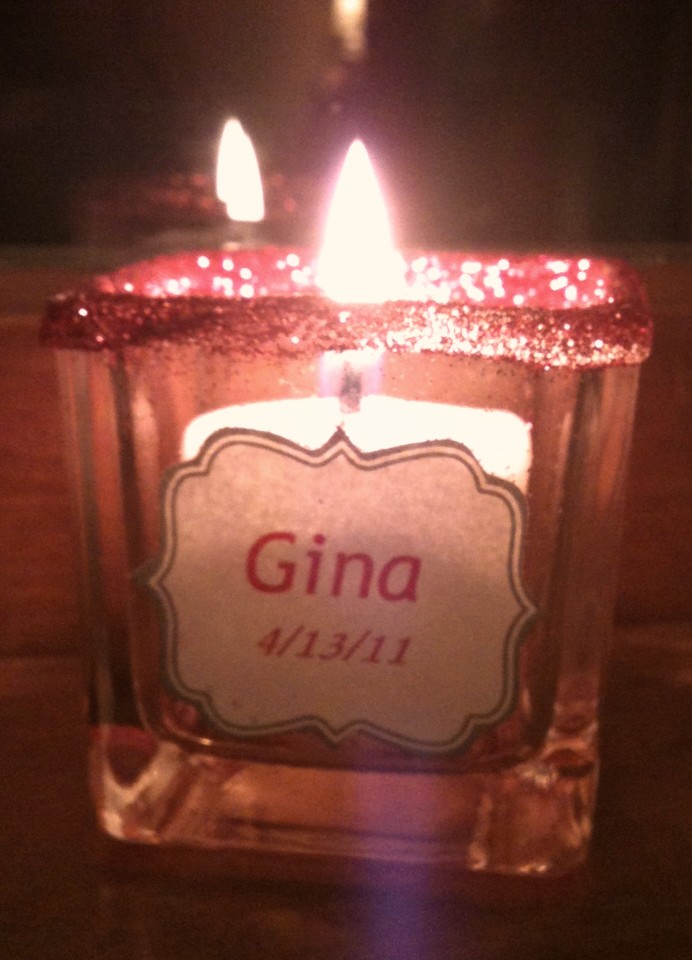
I lit my Blessingway candle in the wee hours of the morning when I saw that her labor at home was underway.

I faced the candle in a window towards her home 1500 miles away.

I like how the reflection makes it appear as though the light keeps spreading west towards her…….

sending love and support…..

Not only did she have a VBAC today–

She had a HOME VBAC !!

AND during Cesarean Awareness Month!

Gina of The Feminist Breeder is one of the most courageous women I have ever met!

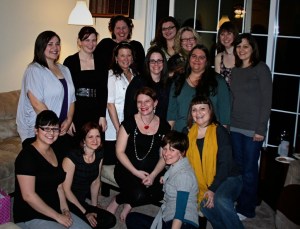
Yep- I met her! She invited me … little ole me… to her Blessingway in March when I happened to be in town. I was so incredibly excited to meet her and all her fabulous birth team! Yep- I’m in that Blessingway post she did.

Photo of the TFB Blessingway Group

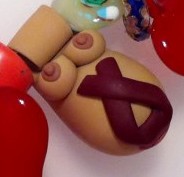
Here’s one of the beads I gave her for her necklace.

ICAN Cesarean Awareness Bead

Congratulations Gina and John!

Welcome Jolene!

But it’s her story to tell……. Head over to her blog and check the coolest EVER live blog birth event. The whole thing can be read and viewed from last night thru til this morning. The audio and video clips are for QuickTime player and each clip may take a few moments to load before you can push play.

I had it on today … at work… in the NICU and took the opportunity to try to educate..

Thanks for sharing Gina!

I am so so happy for you!

Success! You CAN Do it Right with a Preemie!

Short Little Success Story

Recently had to attend a birth for a 34 weeker who had been threatening labor since 32 weeks. She had been given a regimen of steroids and antibiotics per our protocols. The parents had a beautiful birth plan. They wanted Skin to Skin at birth, baby nursing before any separation and were adamantly against formula if at all possible. Both were frightened of the preterm birth, worried for their child’s safe transition and concerned that none of their wishes would be carried out.
I had the opportunity to discuss some of these with the Neonatologist and the parents before the birth. The doc was all for doing as much as they’d wished for at birth (that we could) provided the baby did not require respiratory support…

The baby was delivered hollering at us, alert and pinked up nicely! After observing and examining him for a short period, the doc gave the go ahead for Skin to Skin as long as I could stay and observe. Happy to oblige, I had that 4 LB naked baby up on mom in no time surrounded by her warmth and love.
I did the babies first glucose check (while STS) which was at a great level. Mom proceeded to start latch attempts. The baby did nuzzle and lick the copious colostrum she offered but wasn’t able to accomplish a latch. Vitals were stable, they were snuggling… but by an hour– the Neo was getting antsy. I had to take him in to the NICU with Dad in tow. No resp symptoms. Pink stable and alert. Placed up on the warmer table and connected to all the monitors for observation, he had his second glucose check. We expect it to drop at this time which is the normal nadir. It was however 38 which meant we had to feed. I asked for 5 min. This mom had a copious colostrum flow. The baby was not symptomatic. I had another RN watch him while I scooted back to L&D with a pump and small collecting cups. I figured we may have to hand express because many moms don’t respond to a pump quickly. This mom did respond and in a few minutes we had about 10 ml !!
I took that right in to the NICU leaving mom to finish a pumping session. We syringe fed the 10 ml and a subsequent glucose check was 54. Mom sent in a container of 15 more ml 🙂
They got to have a beautiful experience with their preterm boy who never got any formula … at least not in the NICU before discharge.

Yay!