Skip to content

Posts from the ‘My 35 cents’ Category

No Prenatal Care? …..What are YOU Hiding??

No Prenatal Care is usually a symptom of something--hiding some type of underlying problem. Sometimes it's very ugly. The most common encounters we have involve illicit drug use during pregnancy. We need to develop a comprehensive Maternal and Neonatal Drug Screening protocol to protect the newborn.

Read more

Preserved Children

I received this recipe from a friend quite a while back. I felt this would be a great place to share!

Ingredients:

  • 1 large field
  • 2 or 3 small dogs
  • 2 handfuls of dandelion blossoms
  • 4 – 6 clusters of daisies or other flowers
  • 1 brook or stream
  • smooth pebbles
  • 1/2 dozen children (more or less)
  • Basket of delicious foods

Recipe Directions:

Sprinkle large field with daisies and dandelions. Pour brook gently over pebbles then watch and listen for babbling.  Mix children with dogs, add to field and allow to run.  Cover all with deep blue sky and bake in sun. Nibble on contents of basket at any time while watching. When well browned……… cool in brook or stream. Alternate cooling could be in bathtub later that day if desired.

Follow this recipe frequently for sweet dreams and happy children!

Creek

Have one to share with me? Please leave in a comment!

OB Docs and Nurses Scoff at Homebirth

My community hospital’s views have never been in favor of any type of home-birth… whether it’s with a skilled professional  practitioner or a skilled lay midwife. There could have been some free unassisted births going on but we were not aware….  As I grew-up in this profession, I learned first from my experienced counterparts…then I began to educate myself and learned a lot from mothers and babies.  The doctors and nurses I worked with were all stagnant in their knowledge in my early years. They were satisfied with how things were.  I was young, I had an open-minded philosophy and an eager quest for knowledge.

In the later 70’s, just when we began to have mothers speak out and request a more natural childbirth, I had a few friends who enlisted the aid of some lay midwife in the region and arranged for homebirths. They all had a really nice birth experience without a single complication. Perhaps that was why I was open to the idea even though I was not personally involved. Besides some of the truly prepared couples who came in and had incredibly beautiful births….. that had been my first exposure as an alternative option to the knock’em out–pull’em out births I had been working with on the job. I knew my friends were very low-risk and had done their homework. 

   However, the hospital’s exposure to a homebirth in those days was only if the homebirth went awry for some reason or another and they came in our doors seeking help…  here’s what the docs and nurses would say to one another :

  • “Can you believe she planned to deliver at home???”
  • “How could she take take a chance like that with her baby?”
  • “The reason people started coming to hospitals to give birth was because mothers and babies were dieing at home….she must be crazy or totally insane!!”

   We’ve had planned homebirths come in for various reasons, as I am sure other facilities did…. (keep in mind that in my area, the usual birth attendant was a lay midwife). The situations bringing the mother to the hospital were often scary and upsetting for her. The most common were:

  • Fetal heart rate decels with or without meconium stained fluid 
  • Lack of progress with pushing mostly after many hours..
  • Higher than normal bloody show or bleeding–possibly abrupting
  • Breech, brow or face presentation
  • Retained placenta

Often the OB’s didn’t handle themselves well.. certainly not professionally. We had this one OB who would call for the OR to be opened before he even examined the patient or evaluated the situation…..regardless of why they came in.  And he often actually yelled at the mother, in the middle of her scary situation.

“Your baby will die if we don’t do an emergency C/S right now, why did you let this happen!”

Most often the backlash was directed at the midwife who cowered in the hallway- uninvited by the staff, left alone detached from her patient. She never left the unit though until she was afforded the opportunity to visit and speak to her patient. 

The two significant situations I remember which would fall in to statistical data for morbidity were:

  1.  An abruption which resulted in a crash C/S upon admission and a neonatal resuscitation with good response….(final apgars 3@one min then 7@ five min) positive overall outcome, no long term sequelae.
  2. A birth where the father (a chiropractor) was the birth attendant for his wife, a multip, encountered a shoulder dystocia and the baby ended up with a displaced fractured left humerus. That baby was in a crib with traction to realign the bone. The child went on to be an honor student at a local university after homeschool.

I feel that instead of the midwife or mother receiving hostility (or even the mother being wisked away to the OR without a trial of something if the baby was deemed stable..)~ the staff should have behaved in a compassionate professional manner, acting on any urgent situation with consideration that this mother is now experiencing not only labor but fear and grief over the loss of her beautiful planned birth.

Despite all the negativity from the staff, we never had a seriously bad outcome from attempted homebirths arriving on our doorstep.  We still have attitude problems, probably always will~ just as we do with breastfeeding.  I wish they could  look at it from my perspective. Those who choose homebirth today have better information to hopefully make an educated informed decision about their birth options and choose wisely. I really like Ricki Lake’s “The Business of being Born” among other’s. I hope those choosing homebirth are truly investigating all these options, deciding what is best for them and not making any decisions out of “anger at the system” or any sort of revolutionary zeal.  

  There is so much out there for medical professionals to be aware of other than what goes on in their tiny little realm, their little part of the world. My co-workers and doctors need to be better informed.  

Any one bad outcome (which most certainly happens in the hospital)  does not mean that every homebirth is a bad idea.

In Memory of Daddy

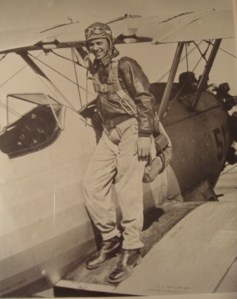
Captain Thomas Joseph Shanley

Captain Thomas Joseph Shanley

Happy Memorial Day for Daddy
This is a day to remember those who risked their lives in service to our country. Today, I have been reading all the tiny bits of information written by his crew members, memories they put together as they grew older. My father was a pilot in the US Army Air Corp during WWII.  He flew as co-pilot of a B-17  with a crew in the 8th Air Force, 94th Bomb Group, 332nd Squadron.  They were based at Rougham, Bury St. Edmonds, England.
He did not speak to any of us of his missions or the  war when we were growing up. We asked, he always said it was secret.  He kept a lot of it hidden away. He probably had some degree of post traumatic stress disorder. I don’t think he ever really recovered. He was a wonderful man and taught me many things growing up. He died at a young age, 58 in 1982. What we know about his life during the war, we learned from these other crew members. I am very grateful to have a better understanding of what he went through, a better understanding of the hell of war.
I love you daddy.
I dedicate this day to you and to all the men and women like you.
Thank you

Cesarean Delivery of the Second Twin… Why? 

029I was talking to one of my on-line Twitter friends @onefinebreeder about twin delivery. I was telling her about how things used to be.. how vertex-nonvertex twin gestation’s were always delivered vaginally ….. and she commented on how it was sad that some of the old OB skills have been totally lost to surgery… So Very True!

I got to thinking about the first combination Twin delivery I had witnessed back in the very early 80’s. This was actually one of our own (hospital employee) nurses .  She was a multip…. around 37-38 weeks and healthy…no complications during pregnancy. Twin A delivered spontaneously, vaginally with a generous episiotomy as they often performed at that time… The baby , a girl, was about 6 pounds, vigorous and had no problems. We were all marveling at the first baby, checked fetal hearts on the second twin and started waiting for him to get in position.  Still before consistent ultrasound, we were not worried. However, we had a newer doctor who was attending this birth. He began to get concerned after 5- 10 min when contractions slowed and he was worried that if this baby was breech, he would have difficulty with the “after-coming” head. Up to this point, all I had learned was this can be a real concern if the smaller feet or buttocks present through a cervix which is not fully dilated. Much research was done later on but at the time, I did not know about it. He began to ask us to call the OR for a C/S. This was unheard of in my limited experience at the time…. my 70’s world. I thought.. how can they do a C/S now when one baby was already born??? I tried to be an advocate… (my early days… )”We have Piper forceps…”  I said meekly… “Have you tried to grab a large part and help bring the baby down… ?” This was my limited knowledge… all I knew to suggest. I kept wishing one of the other doctors was on duty that day.. or maybe we could call them???

In front of the mother, he said to me “I’m not going to have a bad outcome here!” By now it was 20 minutes or so. There was no cord prolapse, no drop in fetal hearts, no evidence of immediate trouble… the baby was seeming to work itself into breech position…. To the mother he said “Your baby is in serious danger and the best thing to save him is to take you for a Cesarean now!” “I’ll sew your episiotomy together while we are in the OR.”

I was in shock. She signed, scared to death of course. So we prepped her for the OR. She went up for a C/S of her second twin and repair of her generous episiotomy. Her second baby was delivered frank breech…  a beautiful boy about the same size and was also vigorous and healthy. I remember I felt as though she was almost assaulted. I remember feeling that this was a true rare event if it every happened before. There was no immediate access to information like today.

Luckily mom and babies did fairly well in the postpartum period even though healing from both the episiotomy and the C/S was difficult for her.
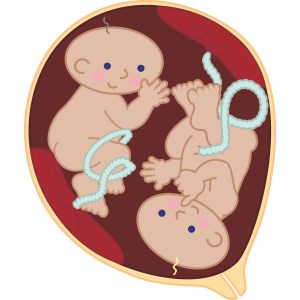
"How can I get out if I'm not head 1st ??"

" Psst-- How can I get out if I'm not head 1st ??"

I wanted to see how much research I could find on this topic. I had gone to the green journal (OB & GYN) website but then it locked me out. (You can only look at abstracts anyway unless you want to purchase the article. You are on your own for that.) I had some luck with the abstracts at PubMed so I have put a few here.

I decided to take a look across time…….

This first one is from 1981. . Quoted abstract from the PubMed site:

Cesarean Section for Delivery of the Second Twin

Evrard,JohnR.; Gold, Edwin M.
Obstetrics & Gynecology. 57(5):581-583, May 1981.

Four cases of combined vaginal-abdominal delivery of twins are presented, and an additional 5 cases from the recent literature are discussed. Malposition, malpresentation, and contracted cervix were the main indications for cesarean section for the birth of twin B. In the 9 cases presented, there were 2 perinatal deaths.

Interesting that this research was done during the same time frame as my experience above. I’d like to know more about those poor outcomes 😦

The next interesting article I found was researched over a 10 yr period, somewhat close to here in a larger facility, published 1997. THIS study examines the delivery of the second twin by utilizing external version vs breech extraction . 😉 The results are showing in favor of breech delivery vs version (those meeting exclusionary criteria ).. Versions were associated with higher a incidence of Cesarean and fetal distress. Neonatal outcomes no different and are stated below:

Method of delivery of the nonvertex second twin: a community hospital experience.

 Smith SJ, Zebrowitz J, Latta RA.   J Matern Fetal Med. 1997 May-Jun;6(3):146-50

Abington Memorial Hospital, Pennsylvania, USA.

The purpose of this study is to examine the incidence of cesarean section and fetal distress complicating the delivery of the second twin in vertex-nonvertex twin gestations in which the second twin underwent either breech extraction or external version. The intrapartum courses of 510 twin gestations delivered at a community hospital over a 10-year period were retrospectively analyzed. All vertex-nonvertex twin gestations were identified in which the second twin underwent attempted breech extraction or external version. Exclusion criteria included birthweight < or = 1,500 g, fetal anomaly, intrauterine demise, and monoamniotic twins. Of the 76 twin sets that met inclusion criteria, 33 underwent external version and 43 underwent primary breech extraction. The two groups had similar demographic characteristics. External version compared to breech extraction was associated with a significantly greater incidence of cesarean section (8/33 vs. 1/43, P = .008) and fetal distress (8/33 vs. 1/43, P = .008). There was no difference between groups in neonatal outcome for the second twin as measured by length of stay, 5-minute Apgar < 7, intensive care unit admissions, hyaline membrane disease, intraventricular hemorrhage, and traumatic birth injury. In conclusion, the increased incidence of cesarean section and fetal distress in patients undergoing attempted external version suggests that breech extraction may be the preferable route of delivery for the nonvertex second twin weighing more than 1,500 g

The next study was published a little later in 2001 and covered a 20 year span of time… during the 80’s and 90’s at a larger center in Nova Scotia, Canada. They noted an increase in their combination vaginal/cesarean twin births and documented some statistical data, looked at reasons for an operative second twin birth. I wish to read this study further some day to see if there is mention pertaining to mother/baby outcomes other than statistics outlined (even though that wasn’t their objective) in this abstract:

Combined Vaginal-Cesarean Delivery of Twin Pregnancies

Obstetrics & Gynecology . 98(6):1032-1037, December 2001.

Department of Obstetrics and Gynaecology, Dalhousie University, Halifax, Nova Scotia, Canada.

OBJECTIVE: To estimate the incidence and factors associated with combined vaginal-cesarean delivery in twin pregnancies. METHODS: We studied all twin births weighing 500 g or more during a 20-year period (1980-1999) at a tertiary care center. Major anomalies, monoamniotic and conjoined twins, and antepartum fetal deaths were excluded.

RESULTS: During this 20-year period, 105,987 women delivered, of whom 1565 (1.5%) had twins. Of these, 1151 twin sets fulfilled the study criteria. The mode of delivery was vaginal in 653 (56.8%), cesarean in 448 (38.9%), and vaginal-cesarean in 50 (4.3%). During the 20 years there was a statistically significant increase in combined vaginal-cesarean and elective cesarean deliveries, with a decrease in vaginal deliveries. Parity, gestational age, and birth weight discordance (>25%) were not associated with combined delivery. Compared with vaginal delivery, the nonvertex second twin was associated with a twofold higher risk of cesarean delivery (relative risk [RR] 2.3; 95% confidence interval [CI] 1.3, 3.8; P =.002); and an interdelivery interval of over 60 minutes with an eightfold higher risk (RR 8.2; CI 4.6,14.6; P <.001). Vaginal-cesarean delivery had a 22-fold higher use of general anesthesia compared with vaginal delivery (RR 21.8; CI 5.4, 88.5; P <.001). CONCLUSION: There has been a significant increase in combined vaginal-cesarean and elective cesarean deliveries among twin gestations, with a decrease in vaginal births. Vaginal-cesarean delivery is associated with nonvertex second twin and a prolonged interdelivery interval.

Now we come to 2008!  There is a study here from Texas. This study looked a twins born by C/S after labor and twins who had cesarean birth of the second twin. they campared outcomes to see if the twin of a combined delivery had more problems. The most important pieces of information I gather from this abstract of results…. (again, having NOT read the entire study):

“Combined twin delivery may be associated with endometritis and neonatal sepsis when compared with a twin delivery where both are delivered by cesarean in twin pregnancies experiencing labor. More serious neonatal sequelae, including hypoxic ischemic encephalopathy and death, were not affected by the route of delivery of the second twin.”  Hmmm 

Cesarean Delivery for the Second Twin

Alexander, James M.; Leveno, Kenneth J.; ….et al:for the Eunice Kennedy Shriver National Institute of Child Health and Human Development (NICHD) Maternal-Fetal Medicine Units Network (MFMU)   Obstetrics & Gynecology . 112(4):748-752, October 2008.

Department of Obstetrics and Gynecology, University of Texas Southwestern Medical Center at Dallas, 5323 Harry Hines Boulevard, Dallas, TX 75235-9032, USA. james.alexander@utsouthwestern.edu

OBJECTIVE: To examine maternal and infant outcomes after a vaginal delivery of twin A and a cesarean delivery of twin B, and to identify whether the second twin experienced increased short-term morbidity as part of a combined route of delivery. METHODS: Between January 1, 1999, and December 31, 2000, a prospective cohort study of all cesarean deliveries was conducted at 13 university centers. This secondary analysis was limited to women with twin gestations who experienced labor and underwent cesarean delivery. We compared outcomes of the second twin in women who had vaginal delivery of the first twin and a cesarean delivery of the second twin to those who had cesarean delivery of both twins. RESULTS: One thousand twenty-eight twin pregnancies experienced labor and underwent cesarean delivery; 179 (17%) had a combined vaginal/cesarean delivery. Gestational age at delivery was 34.6 weeks in both groups (P=.97). The rupture of membranes to delivery interval was longer in the combined group (3.2 compared with 2.3 hours, P<.001). Endometritis and culture-proven sepsis in the second twin were more common in the combined group, respectively (n=24, odds ratio 1.6, 95% confidence interval, 1.0-2.7; n=15, odds ratio 1.8, 95% confidence interval, 1.0-3.4). These differences were not significant after logistic regression analysis. There were no statistically significant differences in an arterial cord pH of less than 7.0, Apgar score less than or equal to 3 at 5 minutes, seizures, grade III or IV intraventricular hemorrhage, hypoxic ischemic encephalopathy, or neonatal death. CONCLUSION: Combined twin delivery may be associated with endometritis and neonatal sepsis when compared with a twin delivery where both are delivered by cesarean in twin pregnancies experiencing labor. More serious neonatal sequelae, including hypoxic ischemic encephalopathy and death, were not affected by the route of delivery of the second twin.

I gather from these studies that a combined delivery route leads to more problems.. however…there are probably more problems than breech presentation alone to lead the provider to make that choice. I believe that many newer providers of obstetrics in a hospital setting are more apt to do a scheduled C/S for any vertex-nonvertex twins they encounter. That is what is done in my facility today. The same for all breech presentation singleton gestation.

Where is that old-fashioned nurse when you need her?? How ’bout the old fashoined doc??? 😉

I am very interested in anyone’s story or experience either in healthcare or your personal birth. Please let me know if you know anything about this!

Thanks for reading!

Breastfeeding, Bottle Feeding and…. Somewhere In-between…. Why the Guilt?

There has been so much discussion circulating in the blogosphere right now about breastfeeding.  I thought I’d add my 2 cents because….I have an opinion and….. I have just a little experience in this field both in study (2 year Lactation course, IBCLC for 10 years, current CLC) and in practice (35 years).

I thought I knew so much in 1988 after nursing 3 babies and assisting others for nearly 15 years. I actually thought I could just take the IBLCE exam based on my experience!

I was so ignorant and naïve!

I started to talk to some IBCLC’s and my eyes were opened wide to the real world. Up to that point, at that time, (I sadly and guiltily admit) I had no idea about the volume of study and research in the field of lactation. I had NO idea just how wrong we were doing things at my hospital.

I launched into a lactation course, soaking up all I could, 3 years of study preparing for certification. I set out to change the world… at least my world. I wrote big proposals for the hospital. I applied for grants to fund a lactation program. I developed education competencies for the staff. I started breastfeeding classes. I thought everybody shared my passion, that they too would want to learn …. because I was right!!

Instead I was the target of all the boob jokes you could think of and I had almost no support. My ideas were rejected left and right.

Long story short…it took me a long time to come to terms with accepting small changes, taking baby steps…..continuing to do the best job I could with each mother-baby couple and to keep a positive outlook. I needed to remain realistic about how much I could actually accomplish one step at a time. Slowly I began to have people under my wing trying to learn. Yeah!

I learned a lot about how to approach physicians, co-workers, managers and most of all …. mothers.

I am not an expert in journalism or critical analysis so this is my opinion of what is going on right now. 

There have been some irresponsible journalists, those who have a bigger platform than most of us, writing negatively about something they have not studied or truly researched. They are expressing their opinion and including an emotional component which has, in my opinion, gotten the reaction they hoped for from breastfeeding advocates as well as those who concur with the authors. More hits, more readers. I feel they have twisted the facts to benefit or support a point they want to make. I read some of them.. other’s I really just scanned then brushed off so I don’t know everything that’s been said. On the positive side, these articles possibly give us a larger platform to provide correct information to a larger public in reply.

I read a lot of blogs and I really respect and admire all the research that many breastfeeding advocates put into their fabulous posts. These are educated women who are trying to provide current accurate information! (@phdinparenting, @bfmom, @MommyNews , @JakeAryehMarcus, @blacktating ,@AmberStrocel,  and so many more). I applaud their passion and breastfeeding advocacy. They are doing a very important job. Breastfeeding IS very important and deserves advocacy, protection and support! There are still large scores of women out there making choices with only tiny bits of information, who really do not know the important benefits of breastfeeding. It is because of this, and because we still haven’t met the US Dept HHS Healthy People Goals for 2010, that breastfeeding advocacy needs to continue. I have been there, advocating in a time where I faced great adversity and a lot of negativity. I am bothered that it still exists…and exists now in so many new ways.

I am more disturbed that some mother’s out there are upset. I always try to understand just WHY a mom feels guilty if she chooses to formula feed or do some combination of formula and breastfeeding. I always hope she’s made her choice with good information and that it is her own true choice. Then good for her! I am not to judge. She needs to be comfortable and confident with her decision. Perhaps her guilt comes from how one single little word or sentence was said, even if what was said is accurate and true. Perhaps her guilt is coming from her own internal struggles. I don’t know.  She needs to come to terms with that herself,  and not punish herself and or publicly criticize the advocates saying they are causing the guilt.  Although there are some very zealous advocates out there, I feel in my heart they are not trying to make any individual mother feel guilty. I read a comment from a mom somewhere that said something like… “perhaps if moms knew it wasn’t all or nothing, maybe more would try breastfeeding.”  My first thought was..why do they even think that..are there really mom’s who feel it has to be all or nothing? Is this causing the guilt because they don’t think they can breastfeed exclusively for the first 6 months as the experts recommend?? 


Over the years, I have learned this:

  • It is inappropriate for a health care professional to indicate to a mother directly or indirectly that formula feeding and breastfeeding are equal. Human breast milk is the superior food for human infants. Properly prepared infant formula is an acceptable substitute for those who cannot or choose not to breastfeed.
  • The first approach is probably the number one factor in gaining a mother’s interest in what you have to say.
  • The education process to a mother needs to be in small doses, sensitive to her unique learning abilities, her cultural beliefs and practices and most importantly, her choices and individual breastfeeding goals.
  • With that in mind, try to provide her with the information she needs to make her decision.
  • Never overestimate a mother’s desire to breastfeed her infant.
  • Never underestimate a mother’s desire to breastfeed her infant.
  • Listen to the mother; help her define her true desires and goals.
  • Many times, the first question she asks may not be what she really wants to ask.
  • The mother’s individual breastfeeding goals, how she defines them, how important they are to her and how she relates them to her actual breastfeeding experience all help define how she measures success.
  • Support the mother, support the mother, and support the mother.


Here are the top 3 responses to the feeding choice question pertaining to breastfeeding at my facility on admission:

  • “Breast and Bottle”
  • “I’m going to do both”
  • “I’m going to ‘try’ to breastfeed”

To each of these I respond very positively with something like… “Great! Tell me what you’ve learned about breastfeeding.”     I will then ask the mom a few questions to somehow find out her true wishes.  

Then I say  “We will support and honor however you wish to feed your baby.  I’d like to give you some information so you can really understand and then tell us what you’d like to do.”  

 I explain some things,  i.e.: how the milk production works, the importance of early feeds etc.. and how formula introduced at that time could  interfere with the process of production, the baby’s ability to latch properly and so on… I usually end with..”We usually recommend to  focus on breastfeeding for now and then offer bottles later after milk supply is established if that is how you’d still like to manage feeding”. ETC…ETC….  Here’s what I then see:

  • There have been so many mom’s who — after a little  bit of information decide they would like to focus on breastfeeding. There have been many who totally fell in love with it.
  • There have also been many who really didn’t want to breastfeed after one single feeding.
  • There are many many still that like to breastfeed and bottle feed in combination right from the start. If they have the right info and understand how things may progress… I still say “Good for you!”
  • I have seen many continue that way for months and they are very happy with that.
  • I’ve seen many mom’s “partially” ( I don’t like to say it that way) breastfeed and feel very proud. I say “good for you!”  They don’t think of it in terms of “exclusive” or “partial”… It’s more like any breast at all…. is breastfeeding vs. no breastfeeding at all.
  • There have been many who also never wanted to try until all of a sudden they see milk leaking!
  • I’ve worked with mom’s where I can see tremendous improvement in her situation, I think she’s going to keep going…but she decides to totally quit. I simply praise her for all her efforts and help her feel proud of herself.
  • I’ve worked with mom’s who have hardly put forth any effort to overcome small obstacles, I think they will probably quit outright… Then..I find out they are the ones exclusively breastfeeding down the road.

I got a comment from a breastfeeding mom @TheFeministBreeder that I absolutely have to share. She describes her own experience in the full comment and on her new blog post.  She comments:

 “Yes, I think that’s the most important part – informing a mother of any and ALL benefits/risks to supplementing, and helping them work through the option they choose.  But to tell a mother to supplement without explaining that it could undermine her efforts is just plain mean.  And too many medpros are doing it.  I’m glad there are more nurses like you who will give out the real information to empower a woman to make her own choice.  My smart friend always says ‘It’s not really a choice if you don’t have all the information.’ “

For those mom’s really trying to breastfeed and struggling, there’s more than I can say right here to cover that. I’m sorry for your struggles and hope it gets easier for you. It is important to have a skilled competent support person assisting you who listens thoughtfully and helps you get to the root of your problem… and helps you define and realize your goals. If you are experiencing guilt from your struggles or from not being able to fulfill your goals, desires to breastfeed….I think that kind of guilt is different from what I’m trying to discuss here. I am not a an expert on that. It is valuable to get the best help out there that you can as soon as possible.

I’m adding this after reading some comments on other blogs.. When approaching a mom to observe or assist with the latch process…. Permission is a must! I ALWAYS ask the mother if she would like any assistance with the latch or if  I may observe how well her baby is latching….. If that answer is yes… The next question is ALWAYS.. May I touch your breast? (if that needs to part of the process). I prefer to help moms by having the mom and BABY do the latch. I try to keep my hands out of it.  All nurses and LC’s should practice this. I am sorry for the mom’s who aren’t asked permission to be helped or touched.  😦


One of my favorite things I like to say to any breastfeeding mom is:

“Try not to make any final decision when it’s dark outside”.


On another note, regarding some reader comments on various blogs about public breastfeeding, a skimpy bikini or the bathing-suit issue of a favorite sports magazine show more skin in a provocative, sexy way than any mom breastfeeding. Even the movie stars in their gowns with plunging necklines are showing almost the entire breast! Somehow, that is OK. There are volumes of video footage and photos all over the place… even on billboards. It is sad that the public opinion of a baby breastfeeding (the most natural way for him to eat) is something that should be done in private … yet young girls are encouraged by media to bare more and more skin. Of course being discreet while feeding is important, but I can assure you, most girls in a tiny bikini are thinking more about “tacky exhibitionist behavior” than a mother breastfeeding her baby. Why aren’t law-makers focusing on any of that?

Medical Science vs Natural Childbirth 

I sat here to write the story of our first planned VBAC and realized as I scanned my other posts that I had to tell just a little more history to help explain the attitudes of the times.

During the mid 70’s early 80’s… our country was changing in many ways. In the medical world, Obstetrical medicine was becoming more specialized with the development of many subspecialties including  “Perinatology” and “Neonatology”.  Perinatology by definition is the study of the unborn fetus and recently born infant during the first several weeks of life. It was the changing concern of obstetricians from a sole focus on the mother’s health to one which is balanced between the mother’s health and the unborn or newborn. ACOG started to offer a specialty certification exam for perinatology  in 1974, and in 1977, the Society of Perinatal Obstetricians (now called the Society for Maternal-Fetal Medicine) was formed.  The term used to describe a Perinatologist today is a Maternal-Fetal Medicine Specialist.  This specialty is the management of high-risk pregnancies and the assessment and treatment of the fetus. Neonatology (established 1975 by the AAP) is the study of a highly specialized care of the newly born infant especially the ill or premature newborn infant usually hospital based in NICU’s.

Young women were becoming more and more interested in a natural approach to childbirth. People all over the country were driving maternity services to offer the availability of birth options for these moms. The ICEA [International Childbirth Education Association] came to our town in the late 70’s and a local chapter was born. “Freedom of choice based on knowledge of alternatives” in childbirth was a motto on their pamphlet information. There were some individuals in the community going for the new certification of childbirth educators. They were educating some new mom’s about birth options…… that we, the staff hadn’t learned about let alone developed as an option for our patients. Many on the staff scorned this movement. It seemed to me that these changes were all happening at the same time. We were learning about advances in observing and monitoring the well-being of both the laboring mother and her unborn fetus, preventing complications etc…. arising from the research studies done from the emerging sub-specialties. We had one fetal monitor and purchased another. As soon as the specialists found that continuous fetal monitoring was advantageous to picking up potential problems in advance, to possibly avoid or prepare for complications, there was a natural childbirth revolt against the constant recumbent positioning that EFM (electronic fetal monitoring) seemed to require. There were more examples as with IV fluids or access and other routine procedures. The nurses didn’t understand. They were just trying to do what science and our doctors were telling them…[though not always willingly as some were afraid of the newer technology.] To them, this group pushing a natural childbirth movement was the same population that had just wanted to be given drugs, put to sleep and “wake me when it’s over” crowd.  

I realize that although these advances in science and the movement of young people seeking natural childbirth options seemed to happen so close to the same time in my world, it probably didn’t happen this way for all of the country. Here, I really think it probably greatly contributed to the attitudes of nurses and doctors I worked with at the time. Those professionals who just couldn’t relinquish control. They were learning more about the science of birth, of monitoring and couldn’t quite allow or see how the “natural” component could fit in. Those individuals often were guilty of the abuse of professional power, the use of misinformation and the blindness and arrogance to maintain control of the birth process… taking it away from the mother.  Those professionals who should have known better.  They did not know of the rights of childbearing Women, or of general patient rights for that matter. Unfortunately– there are some who still have these control issues.

That’s another story….

Childbirth Evolves “You say you want a revolution”

The young pregnant women in the 70’s began to realize they wanted and deserved a better form of childbirth than what was available to them at their local hospitals. They wanted a more natural approach. The Lamaze techniques which started in France in the 50’s (from observations of the Russians) came to the US in the 60’s and made it into the mainstream of “flower children”. Although it wasn’t unheard of, that movement didn’t quite reach our neck of the woods in full force until the 70’s. Many medical staff were solidly unwavering in their principles and still wished to control the entire event.

The fathers were wanting.. and some rightfully so… demanding to be involved and included. The connection that was often witnessed between the couple was no short of amazing to me. I was young, very interested and eager to learn about this “natural childbirth”, so I often let the couples do what they wanted or had prepared and I offered help and support when I could.