Skip to content

Posts tagged ‘labor’

Breastfeeding Barriers

 Barriers~

Even the word itself is foreboding.

Breastfeeding advocacy, lactivism, promotion are important to combat what is really a public health problem and should be a public health priority.     ~Breastfeeding should simply be the norm.


“Today’s medical community recognizes what their

predecessors knew a century ago—that the
American propensity to shun human milk is
a public health problem and should
be exposed as such.
“Today’s medical community recognizes what their predecessors knew a century ago—that the American propensity to shun human milk is a public health problem and should be exposed as such.” 

American Journal of Public Health | December 2003, Vol 93, No. 12

It should be SIMPLE~

It is one thing to talk or write a lot about breastfeeding advocacy and promotion… but WHAT does that really do to break down the hospital barriers. Even with some good ideas or some well-written  plans & protocols(ie. as recommended by The Academy of Breastfeeding Medicine)…. I’m here to tell you, all that does very little to actually change an individual  health-care professional’s actions. There is a critical void in the practice of appropriate breastfeeding management strategies and breastfeeding support from the health-care arena.

Working with barriers day-in and day-out can really open your eyes to what some of us, as lactation professionals or advocates, are dealing with on a daily basis. Many of us are ill-equipped to attempt to enforce evidence-based management guidelines.  There must be better support from the management of each facility, organization or Health-System. It needs to start at the top…. to say we now have an evidence-based breastfeeding policy is NOT enough. I believe it starts with each individual being responsible and accountable for their own practice. 

Action Taken~ 

I have written about how Breastfeeding was taught to me in nursing school and what our scary hospital policy looked like when I got started in this profession. 

I have written an article published in a local parent  magazine to coincide with 2007 World Breastfeeding Week supporting practices to keep breastfeeding SOFT and SIMPLE. 

I have been working on so many different ways to try to keep it SIMPLE… trying to reduce barriers. I have written countless competencies at work while trying to gently re-educate my co-workers. I have developed several PowerPoint presentations, poster in-services, poster displays etc.. to try to help my fellow staff members AND physicians fully UNDERSTAND the superiority & importance of breastfeeding and the use of correct evidence-based management advice, assistance or feeding plans. I have learned to be gentle and patient in the process….one step at a time.

I want to keep it simple for the mother…I’ve tried to work on a simple bottom-line approach to eliminate any maternal barriers of feeling overwhelmed or confused with too much or conflicting information.  

I don’t want mothers to think they have to “study” to pass the breastfeeding test….to “perform” correctly!

I encounter a variety of moms from vastly different backgrounds. There are huge differences in their own individual breastfeeding expectations and goals. We have a large breastfeeding/bottle feeding combination population at my facility. I’ve struggled to balance quality promotion and proper education to both mother’s AND the staff. I continue to to educate with acceptance of all individual mom’s actions. I have written about my approach and maternal guilt.

I wrote:

Never overestimate a mother’s desire to breastfeed her infant.  

Never underestimate a mother’s desire to breastfeed her infant.  

Listen to the mother; help her define her true desires and goals.

Support the mother, support the mother, and support the mother.

This is what I have learned and how some of my approaches and strategies have evolved over the last 20 years so that moms and staff alike will listen. I have written these same things at work…. They are hearing me now. I have to say that at least they are listening and some are talking the talk. How do I get them to walk the walk? Only a select few truly care to try.  The following is some of what we still deal with…

Continued Problems …. Persistent Barriers ~

  • Getting the baby skin to skin in the birthing or delivery room–very inconsistent
  • Accomplishing the first breastfeeding in the delivery area (I even revised the nursing form to REQUIRE documentation of a reason WHY not breastfed….) Most common reasons..attempted, mom tired or mom declined. I have to wonder how often it’s really encouraged…and are they trying to help?
  • Some staff still thinking they have to give that “test” feed of water
  • Keeping a healthy baby in the nursery for hours under “observation” while nurse gets all adm paperwork done
  • Giving handouts to mom but not talking to her, not listening, not helping
  • Telling or directing mom firmly, like it’s an order… often with incorrect info- “you really need to feed that baby, wake him up every 2 hours no matter what”
  • Inconsistent observation of latch and feeding progress (At least some are really good at this!!)
  • Giving partial bits and pieces of correct info mixed with misinformation and not accompanied with actual assistance…… then reporting to me  “I said just what you taught me, Melissa!” (A challange to gently correct)
  • Keeping babies away from mother’s…esp at night so “she can sleep”
  • Incorrect use of  formula— given for so many many reasons that are most often because of all the problems above…… sometimes mom asks for formula…. but a little detective work, proper evaluation, assistance and education can possibly help avoid the formula
  • Not understanding the unique characteristics and needs of the ‘near term’ infant. 
  • Being understaffed when busy… we always have a mom/baby dyad with some need for frequent breastfeeding evaluation and assistance when we are crazy busy….they often get lost in the shuffle
  • Staff members not helping a mom because they tell them to wait for me… I am a staff nurse with multiple duties who happens to be a lactation professional. 
  • The discharge diaper bag from formula companies. ***SIGH***
  • Doctors giving conflicting out-dated feeding management advice
  • Doctors scheduling the first baby F/U visit for 2 weeks on first time breastfeeding moms
  • Persistent Lack Of Management Support and Enforcement of Exsisting Evidence-Based Policies and Protocols which I feel leads to staff apathy

I have been patient, really patient. I have seen progress…real progress. I feel so frustrated to be still dealing with some of these barriers. It is overwhelming and exhausting.  I haven’t been trying to do everything alone. I have “duplicated” myself several times. Some of those individuals are still here, others move on to other jobs, others become apathetic over time. Then we get new people who look at things differently with comments like… “This is what we did at __blank___ hospital..”

What do you suggest could help with the real change……the implementation process??

How do I get them to walk the walk???

Please comment and make a suggestion…  Do you have a good one I haven’t tried?


Wordless Wednesday…..

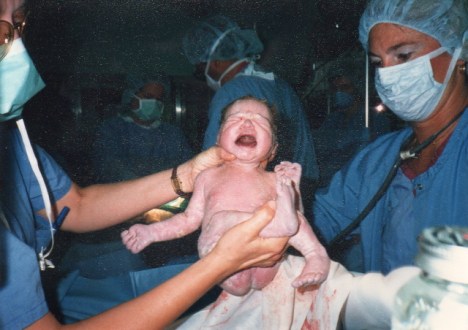
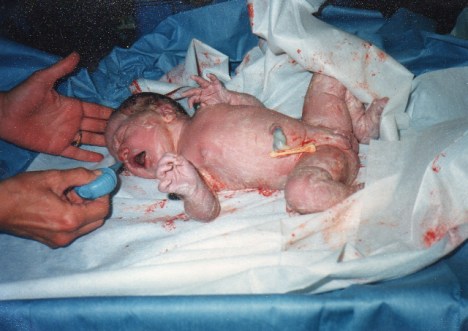
When Blood and Birth were considered CLEAN

When Blood and Birth were considered CLEAN

Thought I’d try this Wordless Wednesday style post. I give you a question….

Do any of you remember when Blood and Birth were considered CLEAN?

No gloves needed or used unless you would be STERILE or handling contaminated items??

Anyone??


No gloves

No gloves

Scary 1975 Breastfeeding Policy

 This story is about

VINTAGE Breastfeeding information

NOT Current Information


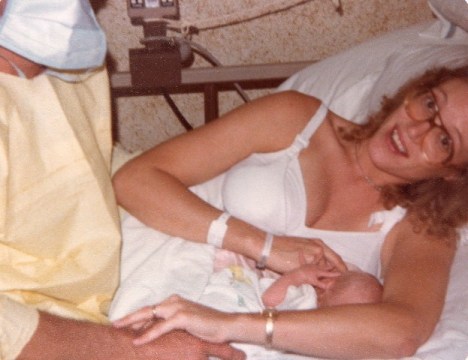
1979 Father wearing gown and mask to attend feeding

1979 Father wearing gown and mask to attend feeding


I have attempted to give an overview of our Maternity Ward as it was when I started to work there. I mentioned how “Once delivered, the baby went to the nursery and became the immediate property of the nurses, only to be seen from a window and allowed to be with the mother at token intervals. The poor little baby was often keep without food/ only water for the first 12 hrs. (Breastfeeding was something only the hippies did.)”

The thought process, as I was instucted even in nursing school, was that most newborns needed to rest after birth, and didn’t require food for 4 to 24 hours. They felt that postponing food would allow time for the mucous to be cleared from the throat and the baby would be allowed ample rest after the exertion of birth and all that handling by doctors and nurses as they provided the necessary care.  My nursing school textbook (Marlow, Pediatric Nursing, 4th ed. 1973) even goes so far as to say that this lag time would allow the mother sufficient rest before giving her infant the breast because….. this first offering is…… difficult. ( Oh… You’d better rest up, dear…)

Another thought process that unfortunately is still around today was that the nurse should not encourage the mother to breastfeed over bottle feed…. least she arouse or cause any maternal guilt feelings. My old textbooks all did list some basic benefits of breastfeeding and proclaimed this as the ideal food. Ie: easier to digest, natural diet for the newborn, convenience, availability AND the provision of identified and unidentified substances which may be protective.  The nurse should provide the information to the mother but not encourage her. They felt prepared formulas (Evaporated or whole milk formulas with added carbohydrates) OR the newer commercially prepared formulas were an “equal” substitute. We did have a full formula preparation room in the nursery with a refridgerator, range, sterilizing equipment etc. When I started, the Similac and Enfamil reps had already just hooked up the hospital with the marvelous free individual bottles of their products which were piled high on top of the former work area for formula prep. I don’t know when they actually stopped making it themselves.

Our 1975 Hospital Policy & Procedure  *

  • We start with NPO (nothing by mouth) for 12 hours.  Then feed one feeding of sterile water to confirm the infants ability to swallow.
  • If the baby has excessive mucus secretions, he should be fed 5% glucose water (G/W)  every 4 hours for the next 12 hrs before his first breast feeding.
  • The father may be present for feedings provided he is properly gowned, wearing hat and mask and has scrubbed hands.
  • For the first breast feeding,  teach the mother to cleanse her nipples with the cotton ball (soaked in a Benzalkonium chloride solotion) and teach proper latch-on techniques where-by the mother should cradle the baby near her breast, stroke his cheek so he turns and assist him to “grip” the nipple when he opens his mouth. Place the baby at both breasts for no longer than 2-3 min each side to avoid sore nipples. Feed the baby 5% G/W if he is still hungry when removed from the nipple.
  • Feedings should be every 4  hours, the mother should cleanse her nipples as above before each feeding.
  • If the baby should cry within 3 hrs of his last feed, he may be offered more 5% G/W.
  • The time spent at breasts should gradually increase to 3-5 min each feed for the first 2 days then continue to increase up to 10 min each side by the 4th day. When her milk begins to flow and the baby will actually be receiving milk.
  • Instruct the mother to pay close attention to which side she began and ended each feeding so she can alternate which side to begin the next feed.
  • Babies will usually require 6 feedings a day for the first several weeks.
  • Once lactation is established, she should be instructed to limit a feeding to 20 – 30 minutes total per feeding. The baby gets 90% of his milk in the first 5 minutes, any additional time is for his enjoyment. Some babies may “cling” to the breast after feeding and may need to be removed. Teach the mother to use her finger gently in the babies mouth to break the suction and remove him.
  • Babies may be taken to the mother for a breast feeding “on-demand” if so written on the chart by the physician


(*This is a combination of information I have from a scanty old policy,
what I remember
and interviewing some older former colleages about what we all actually did.)

If we were unable to get a baby to latch on, we had one tool available to us at the time. We had a hard rubber nipple on a glass base shield that we placed over the breast/nipple and we used the same timing of feeds.  We would only help a mother pump her breasts if she was engorged. The only tool we had to assist her with this was a bicycle horn hand pump. 

There were some pediatricians who were starting to be flexible and improve the approach to breastfeeding in a more natural sense, encouraging initiation earlier and more frequent feeds “on-demand”. There were more professionals opposed to that train of thought and continued their same practices.  When the women started coming in and requesting a better approach to feeding…. they were sabotaged by the nurses who then fed their infants “white water” while in the nursery so these babies would sleep until the next designated feeding time. 

This was 34-35 years ago and I still work with nurses today who have some of these thought processes behind what they do. Many of the older physicians, if taught anything in Med school, were taught similar management protocols. It is such a difficult retraining, re-educating process that some of us face. 

Just last week.. a brand new RN/BSN asked me how the newborn was supposed to survive on colostrum alone?

She was blank faced dead serious. 
I started my answer with…”You are not the first nurse to ask me that very same question and it’s a good question. Here’s why etc……..”
I hope I answered her well enough so she can someday teach the next one and the next…..
We really need much better Lactation Education 
for our Doctors and Nurses.
They should not be so uneducated or ill-equiped 
to properly care for and advise the mother’s in their care!

Our HOSPITAL’S First Planned VBAC

I say our hospital’s first planned VBAC (Vaginal Birth After Cesarean)….. however a prelude is necessary because the actual first VBAC I can remember…. totally freaked everyone out. Here are the stories:

Sometime in the mid 70’s -circa 1976, a mom came in to L/D for a labor check. She was near term with some regular contractions, a little bit of bloody show. The nurse calmly wrote her name down in the notebook…. [Yes– a notebook, that’s the only way we kept track of labor checks back in those days. No medical record, no registration, just a name in a book and the day they were here and checked]… She was getting ready to gather more information when the mom said she had a history of a prior C/S.
Suddenly all the nurses were scrambling—“Quick, call the doctor!” “Quick, shave her belly,” “Get the Fetal Hearts” “Call the OR and tell them we have a STAT C/S”…We were all busy quickly getting her ready for the OR.
This little baby, however, definitely had other ideas. The mom told them she had to go to the bathroom…
Someone said: “Not now honey, we’re going to get you to the operating room to have your baby.”
The Mom: “But—I have to go….. AUGHHHH” (loudly grunting)
One of the seasoned nurses threw the sheets back and low and behold, that little baby was crowning!! “Doctor W– No time for the OR– This baby is coming!”
She did deliver vaginally, quickly, and everyone was in a state of shock!
I was thinking– I didn’t think that was possible–they told me once a cesarean always a cesarean—they told me the uterus would rupture–that the mother would hemorrhage. She and her baby were just fine. I realized once again that I had a lot to learn!

Fast forward now to 1984.

I was sent a nicely written post on the VBAC Pendulum by Dr Shelley Binkley which discusses the rise and fall of VBAC’s in the US and makes for very interesting reading. There’s been tremendous controversy surrounding this topic.

VBAC’s were widely discussed in the literature at early to mid 80’s and many women were interested…the doctors???– not quite so sold on the idea.  However, in the late 70’s early 80’s, we had one very progressive young doctor (Dr.B)  in the main OB practice.  He was responsible for many of the advances we had in a more natural approach to childbirth.  He was willing and eager to give this a try. 

I am not sure what he may have discussed in the office with his patients or how he may have selected his first patient who could try for a VBAC.  Knowing him, he may have brought it up to mom’s instead of the mom bringing it up to him. Anyway– sometime in the summer of 1984 we heard we would be having our first VBAC! She was due in December with her second child. Her first baby had been delivered at our hospital by Dr. B via C/S because of some fetal distress.  He knew her history and had full access to her records to know exactly what type or uterine incision she had.  She was young, healthy and continued her pregnancy to term without any complications. She was very excited. 

The hospital staff was a nervous wreck.

Where oh where were we going to labor her so that should ANY complication arise, we could do the fastest C/S possible??? We didn’t do C/S’s on our unit. The OR was down a floor and in another wing!!! Such a dilemma.  They finally decided to use the tiny windowless isolation room of the Recovery Room right outside the OR.  They decided to bring all the equipment from L/D down to that room to see how it all fit. We had a regular bed,overbed table, the fetal monitor, some other IV equipment/meds/ supplies etc.. a chair for dad, stool and sm desk for nurse…all crammed in the room. (OK- we scrapped the desk..that was rediculous) We were literally practicing like when they do separation surgery for conjoined twins!!  Quite the production. 

Ready or not, here she comes…….arriving in labor almost a week late at 40 5/7 weeks.  She was in very early labor much to the relief of everyone involved. OF COURSE I was on duty! OF COURSE I was elected to be her nurse! I was after all, the most prepared (say all my co-workers).  So while other’s got the room ready downstairs, I admitted her. There were no special consents at the time.  My orders were continuous fetal monitoring,  start an IV right away, AND insert a Foley catheter so we would keep the bladder drained, avoid any excess pressure on the uterine scar and keep her from needing to get up.  I also had to do a big shave prep in case of an emergent C/S. We took her down to that tiny closet of a room when it was ready, around noon. She was still in early labor.  The plan was to do a double set-up in the OR for delivery. That meant a whole set-up for a vaginal birth and a whole set-up open for a C/S complete with the entire OR team. They would call them in when she was in active labor. She had progressed to 7 or 8 cm with her first baby before needing a section so the thought was she’d go fast this time. 

Early labor continued into the late afternoon. All the managers involved kept stopping in repeatedly with all the same questions:….. “Is everything alright??”….. “Any problems??” …..”Any sharp pain in the lower abdomen?”….. “Any blood in the urine?”…….. “How about any excess vaginal bleeding?” ……..They were making me crazy.  We didn’t do any Pitocin augmentation. This poor mom was just in bed the whole time, in the closet with the single bright light, moving around when I suggested changing positions. Finally she headed into active labor and then did progress quickly to transition.  The membranes ruptured spontaneosly and the fluid was clear. The baby was great on the monitor!  The mom was a trooper, never complained, always smiling in between contractions, agreeable to whatever we said.  They asked me to stay and I stayed…. long past my shift.  

They called in the OR teams. I wasn’t nervous anymore. Get me alone with my patient– away from the nervous Nellies and we can connect and work together through labor. It helped that I had seen that unplanned VBAC so many years before and that I had tremendous trust in and respect for Dr. B.. He was there past his shift also. I had already helped her through so many contractions. She didn’t have the slightest symptom of problems. I had her pretty relaxed, she went thru transition and headed into the second stage in good shape.  At this point, they wanted to move her to the OR for pushing. I think back and feel so bad for her… She was however, still excited and still very agreeable.  She pushed on the hard delivery table in the OR in front of the assembled teams. Talk about performance anxiety.  She sure had a lot of coaches!!

She delivered and 8lb 14oz boy named Michael later that evening!!! He was 20 1/2 inches long, his apgars were 8 and 8, just needing some blow-by oxygen in the OR.

There were no complications. This mom came back and had a few more VBAC’s ending up with 5 children overall. I don’t remeber how many VBAC’s we labored in that rediculous closet of a room before we would keep them in L&D. 

I admire this mom for her strength and courage. I thank her for all she taught me…taught us..

Michael will be 25 years old this December!

If you like this story or have any interest in how any specific childbirth element was first seen or has evolved, Please comment or contact me! Thanks

Medical Science vs Natural Childbirth 

I sat here to write the story of our first planned VBAC and realized as I scanned my other posts that I had to tell just a little more history to help explain the attitudes of the times.

During the mid 70’s early 80’s… our country was changing in many ways. In the medical world, Obstetrical medicine was becoming more specialized with the development of many subspecialties including  “Perinatology” and “Neonatology”.  Perinatology by definition is the study of the unborn fetus and recently born infant during the first several weeks of life. It was the changing concern of obstetricians from a sole focus on the mother’s health to one which is balanced between the mother’s health and the unborn or newborn. ACOG started to offer a specialty certification exam for perinatology  in 1974, and in 1977, the Society of Perinatal Obstetricians (now called the Society for Maternal-Fetal Medicine) was formed.  The term used to describe a Perinatologist today is a Maternal-Fetal Medicine Specialist.  This specialty is the management of high-risk pregnancies and the assessment and treatment of the fetus. Neonatology (established 1975 by the AAP) is the study of a highly specialized care of the newly born infant especially the ill or premature newborn infant usually hospital based in NICU’s.

Young women were becoming more and more interested in a natural approach to childbirth. People all over the country were driving maternity services to offer the availability of birth options for these moms. The ICEA [International Childbirth Education Association] came to our town in the late 70’s and a local chapter was born. “Freedom of choice based on knowledge of alternatives” in childbirth was a motto on their pamphlet information. There were some individuals in the community going for the new certification of childbirth educators. They were educating some new mom’s about birth options…… that we, the staff hadn’t learned about let alone developed as an option for our patients. Many on the staff scorned this movement. It seemed to me that these changes were all happening at the same time. We were learning about advances in observing and monitoring the well-being of both the laboring mother and her unborn fetus, preventing complications etc…. arising from the research studies done from the emerging sub-specialties. We had one fetal monitor and purchased another. As soon as the specialists found that continuous fetal monitoring was advantageous to picking up potential problems in advance, to possibly avoid or prepare for complications, there was a natural childbirth revolt against the constant recumbent positioning that EFM (electronic fetal monitoring) seemed to require. There were more examples as with IV fluids or access and other routine procedures. The nurses didn’t understand. They were just trying to do what science and our doctors were telling them…[though not always willingly as some were afraid of the newer technology.] To them, this group pushing a natural childbirth movement was the same population that had just wanted to be given drugs, put to sleep and “wake me when it’s over” crowd.  

I realize that although these advances in science and the movement of young people seeking natural childbirth options seemed to happen so close to the same time in my world, it probably didn’t happen this way for all of the country. Here, I really think it probably greatly contributed to the attitudes of nurses and doctors I worked with at the time. Those professionals who just couldn’t relinquish control. They were learning more about the science of birth, of monitoring and couldn’t quite allow or see how the “natural” component could fit in. Those individuals often were guilty of the abuse of professional power, the use of misinformation and the blindness and arrogance to maintain control of the birth process… taking it away from the mother.  Those professionals who should have known better.  They did not know of the rights of childbearing Women, or of general patient rights for that matter. Unfortunately– there are some who still have these control issues.

That’s another story….

Stand and Deliver? There’s No Stopping Her

I recently read a post from another blog about the study cited in The Cochrane Library discussing patient mobility & upright positions in early labor. The summary talks of the authors’ conclusions that there’s evidence supporting walking and or upright positions in early labor which can reduce the total length of labor without being associated with any increase in medical interventions or untoward affects on mom or baby.

Thus I was immediately taken back to 1977, long before any such studies. This woman certainly didn’t read them! She wasn’t my patient…. my patient was in the bed next to her.  (No single labor rooms back in 1977.)

When she arrived on the unit, she was already entering active labor. Her contractions where about 2-4 mins apart lasting a good 60 seconds and she was WILDLY out of control. This was her first baby, and at 4 to 5 cm dilated, she was thrashing all over the bed refusing any measures of support, IV or pain medicine offered to her by her nurse. She was probably offered “Twilight Sleep” consisting of Scopolamine and some narcotic–which we used a lot and many mom’s had hallucination or delirious type side effects.

It is important to note here that this woman was 5 ft 11.5 in tall and probably weighed a good 225lbs.  I remember this because she seemed huge and I thought she was at least 6 feet tall and looked at her chart. Her nurse was only 4 ft 11.5. The doctor on duty that evening was of Asian decent, very petite and about 5 ft, 1 or 2 in.

Back to the poor mom in labor. I couldn’t help much because I was assisting my own patient and a few labor checks that were hanging around. No other labor coach or father of the baby around in those days… It wasn’t long before this run-away train of labor progressed to point where mom was fully dilated and had the urge to push. Many women of this body stature have quick, sometimes fierce labors…..I have no study, just my observation.
Here’s what happened:
Mom: “I have to get up out this bed
Nurse: “We have to start pushing now, I need you to take some deep breaths and when that next contraction starts, you can push with it.”
Mom: “Mmmh Hymmm I have to get up out this bed!!! Do you hear me???
Nurse: “I hear you, we can’t let you get up right now, the baby will be coming soon… Let’s try to focus on pushing”
Mom: “I AM TELLING YOU….. I HAVE TO GET UP OUT THIS BED!!!! YOU NEED TO HELP ME!
Nurse: “I am trying to help you”
Mom: “I’m gettin up
Nurse: “Please try to relax”…blah blah blah

There was no stopping her. This woman stood up, ON THE BED, placed her hands on the ceiling, spread her legs and began to push—loudly !
There wasn’t anything to do except accommodate her. The nurse grabbed the “precip-tray” we use for emergency deliveries and called the doctor in. They put the large metal side rail down and these two tiny birth attendants were actually the perfect size to get in under her large frame and assist the delivery of the baby. It was an awesome sight!
I wonder if she ever reads about the research now and thinks back at how she was ahead of her time..she knew what her body needed to give birth.

Once a Cesarean—ALWAYS a Cesarean

Thought process, attitudes and practice surrounding Cesarean Section Births of the mid 1970's from my memory.

Read more

Tuesday Twins

    A Few 70’s Twins Tales

  • It was Autumn 1975 when she arrived on the unit in labor. She stood close to 6 feet tall and was very very pregnant. She knew she was having twins. Twins were usually diagnosed after a mom grew larger than dates and by finding two fetal heartbeats. I had never seen someone that big! I was amazed she could even walk. She was taken to a labor room for the standard prep and SS enema (3H..High-Hot and a Hell of a lot). They did an abdominal girth: 60 inches…. that’s 5 full feet! We did not have any U/S to check fetal position. We relied on our exam and assessments. If the first twin was head down (vertex), that was all that mattered for the moment. Labor progressed and when she was close to crowning, she awkwardly and with a great deal of difficulty, maneuvered over to the stretcher and then once again, across the hall, moved onto the delivery table. She was asking for anesthesia. They provided that with some nitrous oxide or something by mask. The first baby was born spontaneously. A boy!! a BIG BOY! He weighed 9 LBS 6 oz! Wheeh! The doctor checked the 2nd baby’s position and it was vertex and moving down. I think they used some low outlet forceps and within 3 minutes, the 2nd baby was born. A girl!! An even BIGGER GIRL! She weighed 10 LBS 7 oz! Both were strong, vigorous and pink.
    The placentas were delivered and Pitocin IV given (a Pit Drip we called it). She had no complications I can remember. These babies were just the biggest twins I had ever seen or ever did see so far…;-)

    How about you? I have a poll on this page…please answer! I’m interested in your twin stories.

  • The young wife of a prominent local attorney arrived with her mother-in-law to be admitted to the labor room for delivery of her second child in the late 1970’s. She was about a month early, 35 – 36 wks. Her husband was away at a conference. Her belly was pretty big for her small frame. The doctors were all quite concerned about the size of the baby and how it would fit through the birth canal. They decided to send her to X-Ray for Pelvimetry. They would take films and measure the internal size of the bony pelvic inlet, spines and outlet, the compare those with biparietal diameter of her baby’s head. The film showed TWO baby’s heads, not one! Surprise! I’ll never forget the phone call the dad’s sweet refined little mother had to make to her son. She maintained her composure…”Thurston dear, we are at the hospital. Elizabeth is in labor, dear……..yes dear, I am quite aware that she isn’t due yet….Thurston dear, there’s more….. You are having twins darling……..Are you alright dear?? Yes..they are all fine…. we’ll call you back soon. See if you can come home, dear.” Elizabeth and Thurston (names changed for this story) became the proud parents of identical twin girls by vaginal delivery later that morning.

  • One of our OB staff nurses, Sue, had a sister having her third baby. She had 2 boys at home and everyone was hoping for a girl. Nobody ever knew the baby’s sex before the birth back then, unless you had an amniocentesis for medical reasons. Even then, many moms did NOT want to know and it was written on the chart that way. The mom’s labor progressed very quickly and soon she was in the delivery room, her sister Sue at her side. I was designated to wait outside the DR and let all the anxious staff know if it was a girl..
    I couldn’t wait after I heard the baby crying. I peeked in- there was a little 5 pounder squirming on the Kreiselman! It was a boy! The doctor was saying “Check the belly—check the belly, I think there is another one!” Sue was huddled over her sister trying to help calm her while reaching back to hold oxygen oven the baby’s face. I came in to help. Quickly after that, another baby was born! Again, a squirming 4 or 5 lb baby boy! Surprise twins! Everyone was quite shocked! Sue was then holding the one oxygen mask over both babies together while hugging her sister. The boys turned out to be identical and quite handsome young men as they grew up.

An Amazing 1970’s Hypnobirth

Circa 1975– I had the privilege of caring for and witnessing a birth so incredible and controlled that in retrospect, I feel this must have been a hypnobirth. My understanding of a hypnobirth is a focused concentration of the mother where she can be in a total state of physical relaxation yet be truly focused and totally aware, in complete control. I’m sure there is more to it but I am no expert.

The mother arrived first; labor had started at home while dad was at work. She was in early labor trying hard to do some breathing techniques. I thought this was another of the new “natural” childbirths. I was coaching her as best I knew how. When the father arrived, the tone immediately changed. Mom had been struggling to maintain control with breathing. The connection between them was instantly apparent. She relaxed quickly upon his arrival, his touch, his presence and they then slipped into their own world. She became very relaxed. He made it clear to me, nicely, not to interrupt them unless I needed to check on or examine mom or baby. He sat close to her in his own state of relaxation very silent, head bowed. When she would begin a contraction, she lightly touched his finger. He then began an energetic animated and quite interesting fast paced storytelling on which she concentrated during the entire contraction.

The contraction ended, the story stopped and dad was once again silent, relaxed, head bowed…waiting. Mom was very relaxed sometimes dozing until another contraction. She lightly signaled him again, and quickly his story picked up right where he left off with the same energy. This went on for about an hour and a half.

She seemed to be progressing in active labor quickly for a first baby. She sailed right thru transition and went on to push. I honestly don’t remember how long she needed to push but she pushed well with his coaching. He didn’t tell the story during pushing but had her completely relaxed in between pushing. She delivered a beautiful baby boy about 7lbs without any complications or any episiotomy! An AWESOME event!

I asked them about this process they had developed for their birth. She told me she was always mesmerized by his stories that they had decided that would be a good “focal point” for her concentration thru contractions. He told me he didn’t even give her a hint of the story he had planned until he began the tale in the labor room.

I think about them from time to time. I wonder if he writes children’s books or something.

I also wish I could have heard the end of that really good story…..

Childbirth Evolves “You say you want a revolution”

The young pregnant women in the 70’s began to realize they wanted and deserved a better form of childbirth than what was available to them at their local hospitals. They wanted a more natural approach. The Lamaze techniques which started in France in the 50’s (from observations of the Russians) came to the US in the 60’s and made it into the mainstream of “flower children”. Although it wasn’t unheard of, that movement didn’t quite reach our neck of the woods in full force until the 70’s. Many medical staff were solidly unwavering in their principles and still wished to control the entire event.

The fathers were wanting.. and some rightfully so… demanding to be involved and included. The connection that was often witnessed between the couple was no short of amazing to me. I was young, very interested and eager to learn about this “natural childbirth”, so I often let the couples do what they wanted or had prepared and I offered help and support when I could.