Skip to content

Fabulous Vintage Breastfeeding & Mother’s Day Art

HAPPY

MOTHER’S

DAY !

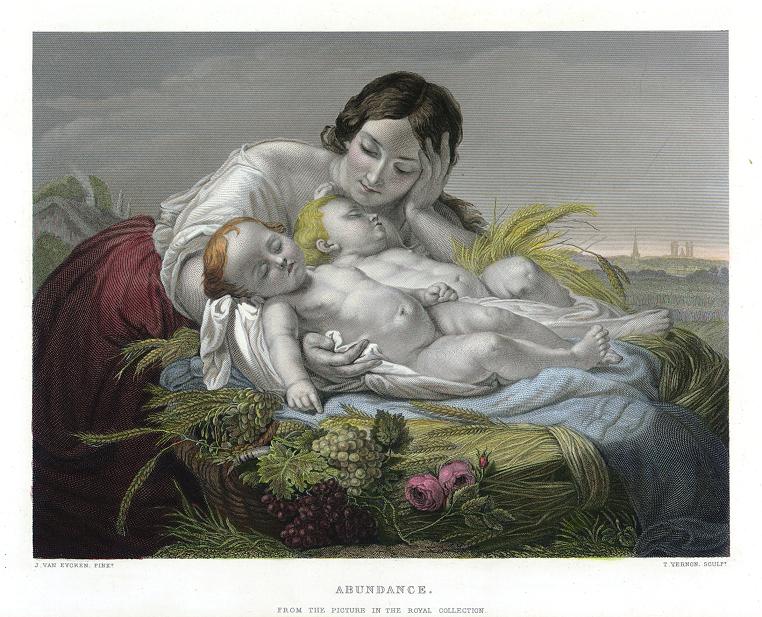
1859 "Abundance" engraved by T.Vernon

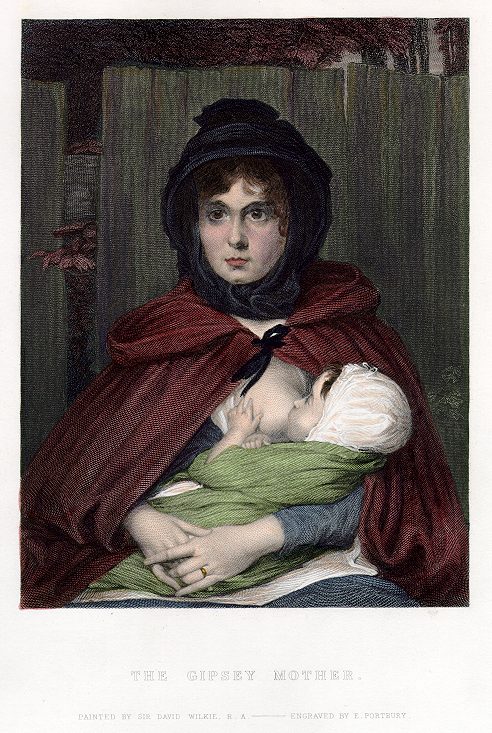
1850 "The Gypsy Mother" engraved by E.Portbury

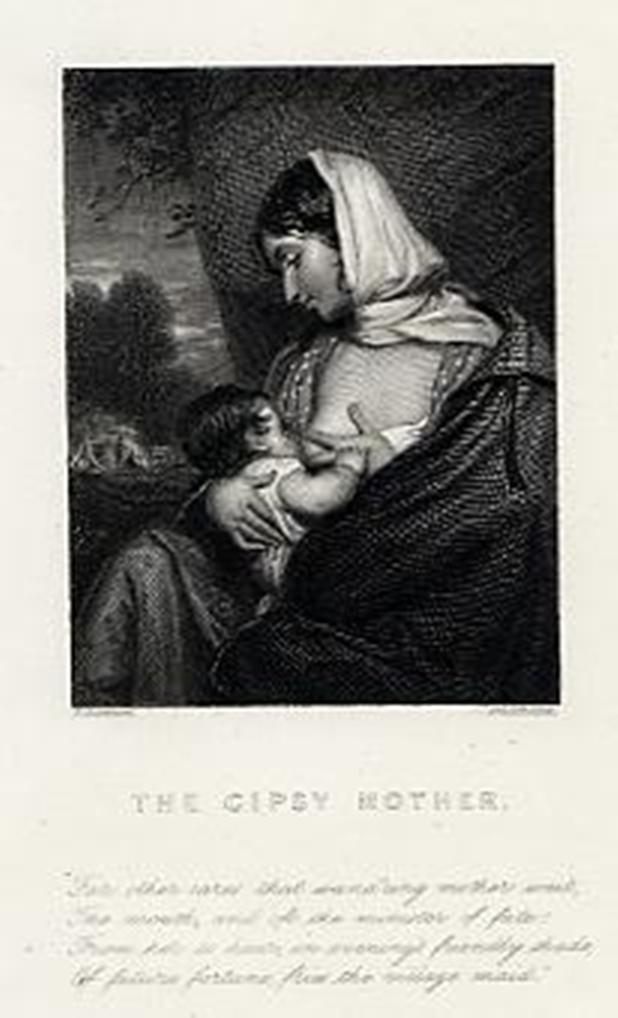
1840 "The Gypsy Mother" engraved by Greatbach

In the world of childbirth, Mother’s Day is a very special day. I have enjoyed years of watching a women become a mother either for the first time or again and again on this very day. It is always wonderful to share that experience with them.  Fabulously Joyful!

But today, I get to be home, pampered by my hubby and just milling about… I came across some wonderful websites carrying fabulous vintage engravings and various clip art. I absolutely adore antique engravings! I have some framed and others saved for something I’ll get to one day…  😉

This first few photos above are images courtesy of antiqueprints.com depicting mother and children. There are two WONDERFUL Antique Breastfeeding Engravings! These are all steel engravings with hand color in the first two.

The remainder of art below is from a website called “The Graphics Fairy” and all of these photos  are to Karen’s credit over there. Beautiful!

Enjoy!

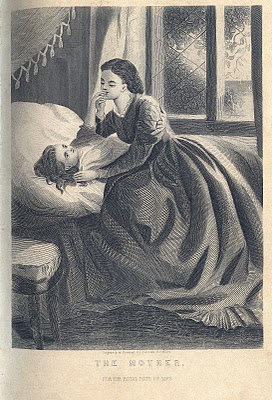
Victorian "The Mother" engraved by the Illman Brothers

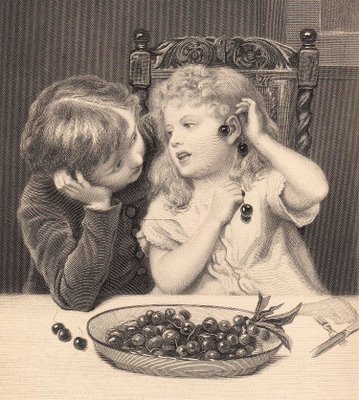
1880's Antique Engraving Children with Cherries

Beautiful old painting of a Mother with Children

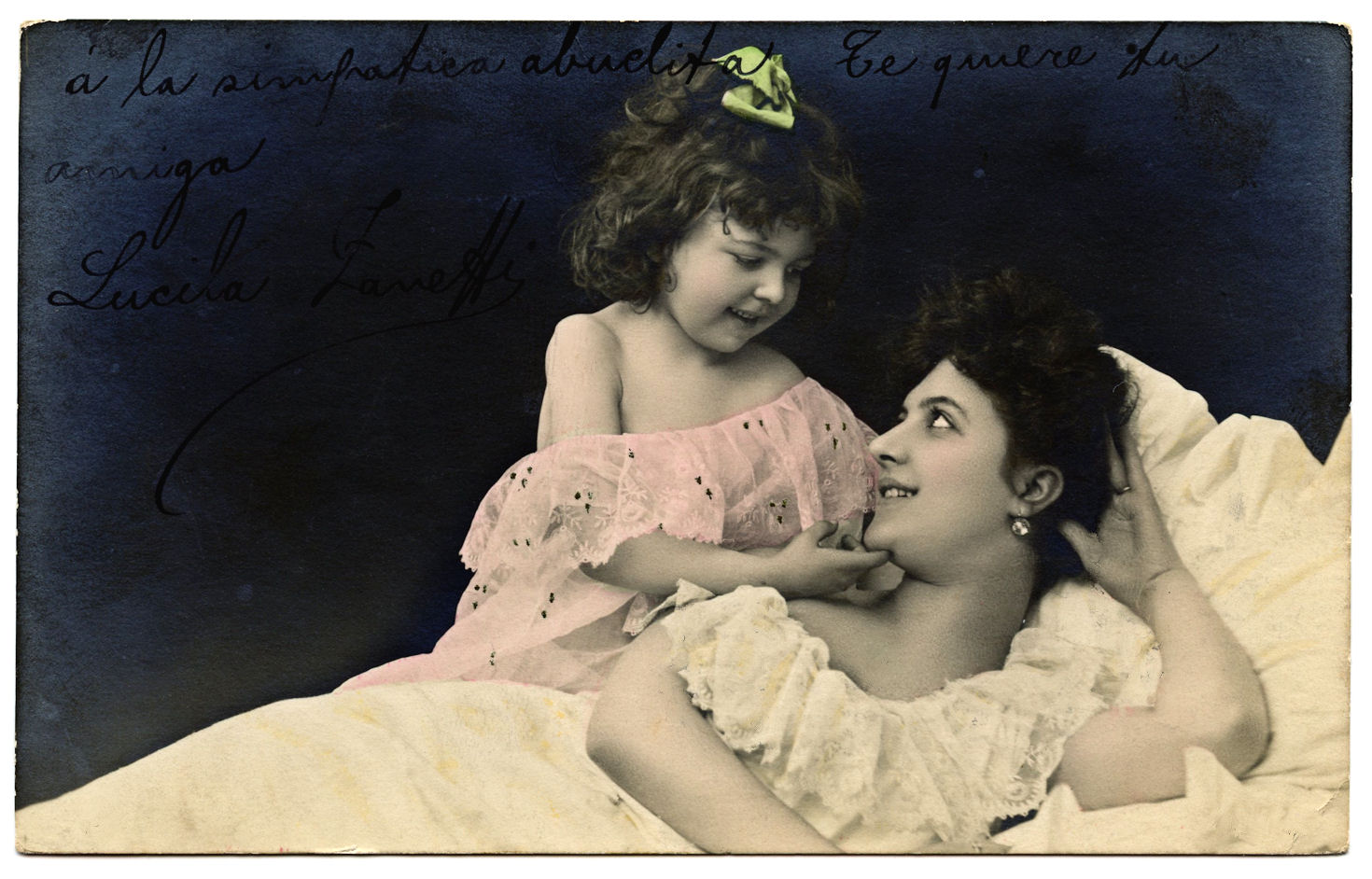
Old French post card

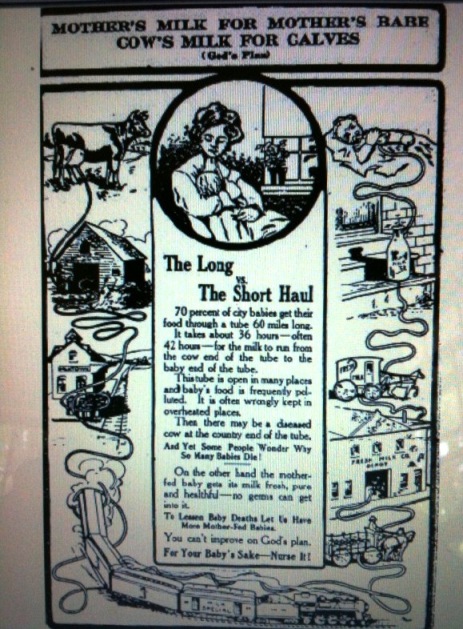
“The American Propensity to Shun Human Milk is a Public Health Problem”

A Historical Perspective

Bulletin: Chicago School of Sanitary Instruction (June 3, 1911)

This is a part of my comment reply placed to an individual who had commented on The Feminist Breeder’s  post “When It Comes to Breastfeeding, We Can’t Handle the Truth”

“There were countless situations over the last 200 years which forced caregivers (whether the natural mother or another individual)to resort to artificial feeding of one kind or another. It is amazing what some of them came up with to try to feed those infants! Necessity was the mother of invention. And many were able to survive. It’s wonderful that they could. Many more, however, sadly died. Many many babies were sickly or died in those times.
You say: “The matter is that formula/breastmilk substitutes became so helpful that people continued for centuries to make it work.” I agree.
But my take on it is that the necessity of an available safe artificial alternative to breastfeeding for those mothers who could not breastfeed their babies took centuries to formulate…to make it nutritious enough and safe enough and to come up with a safe enough feeding container. It was just that.. an artificial substitute.
Gosh– I am NOT an expert on this aspect at all.
I just feel that the heart of this conversation is that artificial infant feeding has risks. Risks that mothers aren’t informed about because society has normalized artificial feeding. Breastfeeding is normal feeding.
No one should ever take away an individual’s choice..EVER…!!!!!
Mother’s simply need better information to make INFORMED choices.
I’m very sensitive and careful in my approach to moms… helping them with information they need to make the best choice for them. Then I will ALWAYS support that mother 100%.
Here’s an interesting historical perspective link for your review from the American Journal of Public Health | December 2003, Vol 93, No. 12
It covers history from about 1890 to early 1900’s.”

“Low Breastfeeding Rates and Public Health in the United States”

Here are some quotes and excerpts from this article published in the American Journal of Public Health (December 2003, Vol 93, No. 12 ) discussing Public Health THEN and NOW.

Quotes:

“Late-19th-century physicians . . . constantly
decried the ‘children with weak and diseased
constitutions belonging to that generally
wretched class called bottle-fed.’
“

“Today’s medical community recognizes what their
predecessors knew a century ago—that the
American propensity to shun human milk is
a public health problem and should
be exposed as such.”

Abstract: “The medical community has orchestrated breastfeeding campaigns in response to low breastfeeding rates twice in US history.
The first campaigns occurred in the early 20th century after reformers
linked diarrhea, which caused the majority of infant deaths, to the use of cows’ milk as an infant food.
Today, given studies showing that numerous diseases and conditions can be prevented or limited in severity by prolonged breastfeeding, a practice shunned by most American mothers, the medical community is again inaugurating efforts to endorse breastfeeding as a preventive health measure.
This article describes infant feeding practices and resulting public health campaigns in the early 20th and 21st centuries and finds lessons in the original campaigns for the promoters of breastfeeding today.”

I found this article to be very informative and very interesting.

WHAT HAVE WE LEARNED???


Overheard Hospital Roommate Discussion on Formula vs Breastfeeding

This slideshow requires JavaScript.
We don’t often “double-up” the new mothers on the postpartum unit but occasionally in times of high census, we simply have no choice. We were incredibly busy this week, so short term doubling occurred.

In one room there was an experienced 3rd time breastfeeding mom (BF mom A) born and raised in an Eastern European country and her roommate was a new first time formula feeding mom born and raised in the USA (FF mom B).

Both were within about 12 hrs of birth.

I had been in the room doing basic exams/vital signs for each baby, asking each mother how she thought things were going etc. etc…. I stepped to the doorway to converse with a co-worker about unrelated tasks and that’s when I started to overhear a very interesting conversation.

I admit it…    I eavesdropped–> I learned.

😮

I stayed in doorway reading a chart……..

FF mom B: “So — are you breastfeeding your baby?”

BF mom A: “Oh yes– Is best for us” (heavy accent)

FF mom B: “Does it hurt?”

BF mom A: “No no- not hurting, good feeling. You do too?”

FF mom B: “Me? No, I’m bottle feeding. My mom said that was easiest.”

BF mom A: “I see…”  pause ……. “Why you not breastfeed? In my country– we are told is healthy way- natural way, most everybody does this. You are told this- yes?”

FF mom B: “Well– yeah, I remember hearing that it was best, but I didn’t try to learn about it because I have to go back to work in 6 weeks and my mom said formula was the same or just as good. And everyone can help me feed the baby too.”

(I’m still looking at a chart in doorway waiting……)

BF mom A: “Is nonsense…sorry don’t know words..false?”

FF mom B: “What’s false?”

BF mom A: “Is false- the baby bottle is same as mother’s breast. False. You are baby’s mother, you do what you must, but all more important reason to know truths– as his mother– so I tell you…  You need truths….   just ask nurse.”

I’m thinking, this will either be a great opportunity to educate a new mom further OR I’ll be moving beds because the bottle feeding mom is now all upset with her roomie…..

FF mom B: “Is it true? (She asked me)…. Is there really that much of a difference?”

I said actually there is a big difference and I’d be happy to talk to her about if she’s interested. I felt this mom was possibly considering to breastfeed and I wanted to preserve that gently… away from any real or perceived pressure. I invited her and her baby into a little conference room so I could have a private conversation with her and give her information without the possibility of her well-meaning roommate piping in.

We actually had a very good discussion. She had a lot of questions which I was so happy she felt very free to ask ….such as all the health benefits, combining work and breastfeeding and how to get started now after 13 hrs.  I answered them and asked her if she wanted to think about it or if she was interested in getting started.

She said she’d like to do it now before her mother got here. She felt fine going back to her room. Since her baby had been fed a bottle only an hour before this started, I suggested she spend some time skin to skin and maybe…. her baby would root and self attach when he was ready.

I assisted her into a comfortable position and we snuggled a naked sleeping baby skin to skin. She was smiling but not feeling very sure of things. I told her to rest and I’d check up on both of them.

Her roommate chimed in “You are good mother learning this for baby. You feel better yes? I help- if you need- I help”

In the end, the baby nuzzled, licked & rooted about a half hour after being placed STS, but didn’t self attach. I assisted her to latch him in a football hold. She was very surprised to see colostrum and became quite engaged in the process. She was breastfeeding when her own mother arrived. This grandmother was kinda taken back at her daughter’s change of heart but was more supportive than the young mother thought she’d be.

Perhaps the roommate had another discussion I didn’t overhear…….. Sometimes you never know…..

The door to more education opens from many different angles. Sometimes pushed open from an individual with a different background.

I hope we have more happy beginnings like this in the future.

🙂

NIH Conference on VBAC’S ~ Continuing to Spread the Word

Spreading the word from the NIH VBAC conference….It’s now coming thru via AWHONN Vitals!!!

This is at least a month old news to most birth junkies but….. but I find it encouraging that the news is coming thru from AWHONN (Association of Women’s Health, Obstetric and Neonatal Nurses). There are many many nurses and birth professionals out there that haven’t even heard about this conference. I know the big AWHONN convention is coming up in Nashville June 12th, and possibly this topic will be presented somewhere although late to get on agenda. Sometimes the nurses can help educate the docs…… ya think?

One topic on the Nashville Agenda is:

“SOLUTIONS FOR SURVIVAL: Working where Birth is NOT Considered NORMAL”

Boy~ would I love to go to that presentation!!!!!

From the recent AWHONN newsletter~

“Panel Urges New Look at Caesarean Guidelines”
The New York Times, Denise Grady
A government panel recently took steps that will increase women’s ability to find doctors and hospitals that will let them attempt a normal birth after a previous caesarean section. The recommendations came from a panel at a National Institutes of Health (NIH) conference convened to assess why the rate of vaginal birth after Caesarean section (VBAC) has gone from 28.3% in 1996 to less than 10% today. The repeat surgeries are contributing to the growing rates of C-sections in the U.S., which today account for nearly a third of all deliveries. Repeat C-sections were previously deemed safer due to concerns that the uterine scar would rupture, putting both the mother and the baby at significant risk. According to the chairman of the NIH conference, “We found the use of VBAC is certainly a safe alternative for the majority of women who’ve had one prior” C-section, as long as the incision was horizontal and low on the uterus. Approximately 70% of women who have had C-sections are good candidates for attempting a normal birth, and 60% to 80% of those who try succeed. The government panel urged the American College of Obstetricians and Gynecologists and the American Society of Anesthesiologists to “reassess” their guidelines, which have rendered many clinicians and hospitals unwilling to allow VBACs. The groups’ current guidelines require that surgical and anesthesia teams be “immediately available” during labor if a women has had a prior C-section. Some institutions were unable to comply, and thus banned VBACs altogether.
Link to Article

Sponsor Me at March for Babies!


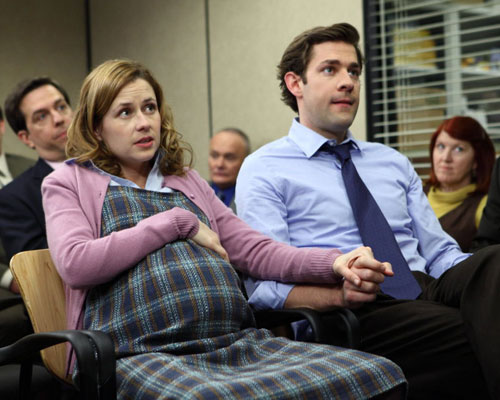
NBC’s “The Office” sends Positive Message to America for Birth and Breastfeeding

I haven’t ever sat through a whole episode of The Office….    maybe that’s why I didn’t ever really like it.  Perhaps I just didn’t “get” it!  This is a smart and funny show. Last night, they had a large viewing audience and great forum to send a positive message to America. They delivered… in a big way! This was a planned hospital birth so I am mentioning what I thought was positive about the reality of how this was portrayed.

Here’s what I liked:

  • Insurance issues … very real for some and guides some of parents decisions
  • Calm approach to early labor …no need to rush to the hospital with first contraction
  • Could be that she just wants another night in hospital but still comes off as a calm early labor
  • Many people in the Office were crazy & nervous except the mom –Pam
  • Pam feasts and enjoys the food while contracting..nobody said you better not eat!
  • I don’t think ever I heard epidural or C-Section mentioned!! (YAY)
  • Dwight decides he wants a baby and makes a contract including the “baby will be breastfed for the first 6 months” after-which he plans to feed some weird stuff but HEY… at least he indicated exclusive breastfeeding to start…right?
  • Pam still doesn’t want to go to hospital when her water broke
  • She showed a real but pretty brief fear of really “doing this” and becoming a parent
  • She didn’t have her ipod w/ birth music.. but this showed she was really planning and preparing for her birth
  • Pushed her baby out! YAY
  • I don’t think I EVER heard epidural or C-Section mentioned!! (I know I already said that but still— 🙂  No talk of interventions!)
  • Breastfeeding was the NORM in this episode! I did not SEE a bottle even though it was mentioned. The roommate was ALSO breastfeeding!
  • Trouble latching in the beginning is a common situation… It didn’t stop Pam
  • THE NURSE! Oh. My. God.!!! What a TRUE portrayal of the inept ignorant rude comments made by the nursing staff at many many hospitals!! (even mine.. but I’m working on that) Good for Pam to question her and stick her plan.
  • A male Lactation Consultant!
  • The fact that they used a Lactation Consultant…. YAY!
  • Great support from new dad Jim… even though it was funny how his facial expressions were not supportive of a male lactation consultant! (did we see the birth attendant? don’t remember)
  • They reach over in the middle of night and grab the wrong baby to breastfeed… I’m sorry—> that was really funny, I hope it didn’t offend any one. It’s not like a nurse gave Pam the wrong baby……
  • They have common new parent issues ie diapering, car seat, not feeling ready to go home etc…
  • Breastfeeding works out at the end of the show and Pam looks incredibly peaceful and happy… 🙂

The funky cover –> hey..it worked for her so really–who cares..?? I didn’t feel like that was a big part of the overall message IMHO.

My rating : Big A+

After the show– I find out via twitter that I actually know the writer and supervising producer! So cool!

(I work with his father who is an excellent Pro-Breastfeeding Pediatrician!)

😎 Psych 😎

What did you think?? The episode is called “The Delivery”. If you haven’t seen it, you can catch it online here.

Flight and Plight of the US Olympic Ski Jumpers

A beautiful ski jumper in flight.

Anders Johnson U.S. Ski Jumper

One of the images often publicized or portrayed as representative of the Winter Olympic games every 4 years is that of a Nordic jumper in flight.

Anders Johnson takes off!

It’s not easy being a part of the U.S. Olympic Ski Jumping team.

Anders Johnson in NY Times magazine (photo by Ryan McGinley)

Anders Johnson (Kempt man of the Hour above) is the son of longtime family friend ….. and my brother’s best friend, Alan Johnson. Alan grew up in the suburbs of Philadelphia. He came with his family in the 1960’s-70’s to the Poconos every weekend and holiday vacation to ski. We were ski families together. I was best friends with all 3 of Alan’s sisters. Alan’s father was Ski Patrol, our father was Ski School-Instructor. My brother and I, along with Alan, became involved in the Ski Patrol and moved on to ski instructors as well. Growing up at a ski area is a fabulous life changing experience. The competitive streak comes out even in the most docile individual. We would build jumps… often taking the entire day to haul hay bales up the mountain and hand pack the snow over them until it was just right and the jump would be perfect! Then the fun and the competitions would begin. My brother and Alan are still competing… 😉 about pretty much everything!

Alan went on to have a career in skiing and coaching with the US Ski team. His expertise has led him to be the head coach of ski jumping, nordic combined and program director over the years for some divisions of the US Ski Team.

His children, Alissa and Anders, fell in love with ski jumping at an early age. Anders was 3 years old when he first followed his sister off the jump. I remember taking Alan’s little brother Eric (Anders uncle) up the ski lift when he was just 3 years old. Since we only had a T-Bar, Eric had to be with a taller person to ride up. That boy was fearless and went down the slope so fast we could hardly catch him! He’d be down at the lift line patiently waiting for someone to take him back up again!

Alissa is an excellent talented jumper. She has done very very well in World competition! For some ridiculous reason, women are NOT permitted to compete in ski jumping in the Olympics! I simply can’t understand any of that when women are allowed to do crazy snowboard half pipe events and race downhill at 75 to 80 miles per hour. And the luge… come on– how dangerous is that??? Regardless… they lost their fight for the 2010 Vancouver games. Sad but true. Now to make matters worse, the Men’s ski jumping has lost it’s affiliation with the US Ski Team!

In many Nordic countries like Norway, Sweden and Finland… Ski Jumping is the national sport. It is given much support and recognition like we value baseball and football. The jumpers are glorified and honored.

Here in the U.S. — Ski Jumping is not given the recognition it should. Here- we give this attention to halfpipe snowboarders and those who do the best tricks, the highest crazy jump, the fastest downhill racer or mogel maneuver etc…

We have forgotten the athletes who can fly like a bird, the athletes who train for years to be able to soar and glide their way in beautiful form to completes the longest jump. …..

For American Ski Jumpers…… they are now on their own struggling to make ends meet and working so very hard to qualify and compete that they don’t even get to attend the opening ceremonies. Here is a story of how they take it on themselves with competing spirit and rise above in the face of adversity:

Project X (from the Anders Johnson Bio page)
Unlike the U.S. Alpine, cross-country, freestyle, nordic combined and snowboard teams, the American ski jumpers do not have any affiliation with the U.S. Ski Team. In 2008, the national body decided to terminate its men’s ski jumping program and drop funding for the sport. That left ski jumping athletes with their families and any willing backers to organize an initiative on their own. The independent program, called Project X, is headed by Johnson’s father, Alan. It has no formal corporate sponsorship and instead relies on a patchwork of private donations. The program’s athletes, including all three of the U.S. representatives in Vancouver, help raise money by going door-to-door and reaching out to local businesses. They raised enough money to hire a full-time coach, German Jochen Danneberg, normal hill silver medalist at the 1976 Innsbruck Games and two-time winner of the prestigious Four Hills tournament, but have little surplus to cover travel expenses.

Here are some Anders Johnson’s accomplishments besides making Olympic history as the youngest Olympic jumper EVER in 2006 Turino at the age of 16!

  • 1st Place 2009 National Championships
  • 1st, 3rd Place 2008 National Championships
  • 15th Place COC Brotterode Germany 2008
  • 20th, 23rd Place COC Villach Austria 2008
  • 25th Place COC Oberstdorf Germany 2008
  • 27th Place COC Velenje SLovenia 2008
  • 29th Place COC Rovaniemi Finland 2007
  • 2x 3rd, 2x 5th FIS Cups
  • 48th Place Grand Prix Klingenthal Germany

Let us remember to support ALL the athletes of the games. Those events which get a lot of press and endorsements help to encourage not only the individual athlete but that sport itself!

Support ALL our American Ski Jumpers this year at the

2010 Winter Olympics

in

Vancouver Canada

2010 U.S. OLYMPIC SKI JUMPING TEAM
(name, hometown, age as of opening ceremonies, birthdate, past Olympics)
Nick Alexander, Lebanon, NH, 21, 8/24/88
Peter Frenette, Lake Placid, NY, 17, 2/24/92
Anders Johnson, Park City, UT, 20, 4/3/89, 2006


Watch Wednesday “The GIFT of an Ordinary Day”

Cherish your ordinary days with your babies and little ones now. Enjoy all the moments.
I just watched this on YouTube. Katrina Kenison reads to a group from her book… a mother’s memior “The GIFT of an Ordinary Day” with music played by her son.
Since all my children are grown, it speaks to me as she wrote it. You may get a glimpse of your future feelings.
Very well done..
ENJOY !
(sob sob……)

For Expectant Families… your “Due Date”…

Hi everyone! Happy New Year!

I have been very very busy over these past months and I’ve spent very little time on the computer….. many of you have had the same situation. Thanks to all of you who keep checking my blog anyway!

I’m here now to talk about one of my big concerns.

Your due date…

Every single year around the holidays, we have a surge of elective, social induction requests.  Here are some comments we occasionally may hear each year around this time on an L&D unit:

“Please, please induce me so I can have the baby and be home for Christmas…please!”

“I’m only 2 1/2 weeks from my due date anyway so I’m ready…”

“I can’t have this baby on Christmas day..I just can’t…you HAVE to help me!!”

“I’m so tired of being pregnant and I have so much to do…can’t you do SOMETHING and make me have this baby today??” (37weeks)

“I really really need another tax deduction this year… ” (heard quite often!)

“Please do something so this baby is born by the end of December…I’ll even have a C/S if you want.”

“Can you induce me while my family is all here?? Please??”

Young pregnant women~ Please don’t do something crazy for a special delivery date.

Please!

Please educate yourself about the risks of induction and the risks of late preterm births.

PATIENCE

“A little patience now adds up to long-term health benefits for your new baby.”

I have received this following information from the Mother-Friendly childbirth community.

I felt it was well worth sharing……..

This is an excerpt from a newsletter from the CIMS ~ Coalition for Improving Maternity Services.

Please read, check out their website link above and the other resources listed below the letter.

Thanks so much!

“For Expectant Families

What you need to know about your due date and late preterm birth

A little patience now adds up to long-term health benefits for your new baby.

You’re not alone if you’re secretly (or openly!) hoping that your baby will get here sooner rather than later.  But when it comes to your due date, it’s important to understand what it represents, what it does not represent, and the potentially serious consequences of agreeing to an induction or c-section before your baby is ready to be born.

Mayri Sagady Leslie, CNM, MSN, clinical faculty at Yale University School of Nursing, recently penned an insightful post for Lamaze International’s Science and Sensibility blog.  In “Beyond Due Dates: How Late is Too Late,” we’re reminded that, despite widespread belief that EDD stands for ‘due date’, it actually stands for ‘estimated date of delivery’!  Mayri writes, “No matter what you call that date on the calendar, it is nothing more than a formula derived from statistical averages which says that sometime within a range of 4-5 weeks your baby will probably be born.  Smack dab in the middle of that range is one of days on which the labor may start.  Yet when it comes to dates in our life, few take on more significance than this one.”

Appreciating this fact is something of considerable consequence when it comes to the immediate and long-term health of your baby.  There is mounting evidence that only the baby should have the right to choose her/his birthday.  Two recent reports add to this evidence.

The CDC’s National Center for Health Statistics recently reported a 20% increase in the nation’s late preterm (34 to 36 weeks ) birth rate from 1990 to 2006.  The report also cites alarming increases in the number of late preterm births among births for which labor was induced as well as among births that were delivered by c-section.  The report cautions, “…it is becoming increasingly recognized that infants born late preterm are less healthy than infants born later in pregnancy.  Late preterm babies are more likely than term babies to suffer complications at birth such as respiratory distress; to require intensive and prolonged hospitalization; to incur higher medical costs; to die within the first year of life; and to suffer brain injury that can result in long-term neurodevelopment problems.”

March of Dimes 2009For the March of Dimes, prematurity is an extremely important public health issue.  The March of Dimes launched a multimillion dollar, multiyear campaign in 2003 to prevent premature birth and raise awareness of its serious consequences.  Last month, the March of Dimes released its annual Premature Birth Report Card.  Sadly, for the second consecutive year, the U.S. earned only a ‘D’ grade, “demonstrating that more than half a million of our nation’s newborns didn’t get the healthy start they deserved.”

We know you’re anxious to meet your baby.  It’s perfectly understandable too if you’re just plain tired of being pregnant.  We just want to remind you that a little patience now adds up to long-term health benefits for your new baby.

Learn more:

  • “Beyond Due Dates: How Late is Too Late” by Mayri Sagady Leslie on Lamaze International’s Science & Sensibility blog.
  • “Born a Bit Too Early: Recent Trends in Late Preterm Births” a NCHS Data Brief from the CDC.
  • “U.S. Gets A “D” For Preterm Birth Rate” press release from the March of Dimes.”
  • Watch Wednesday “Pink Glove Dance” Spread the word!

    Breast Cancer Awareness

    This is a FUN video to watch as you see one facilities efforts to increase awareness in their community and all over the country. It has over 2 million hits on YouTube!

    Put a smile on your face while you watch and keep spreading the word!

    October is over~however…

    The work to increase awareness

    and

    spread the word of the importance of

    early Breast Cancer detection and treatment continues.

    Oh yeah… and I want to work there!